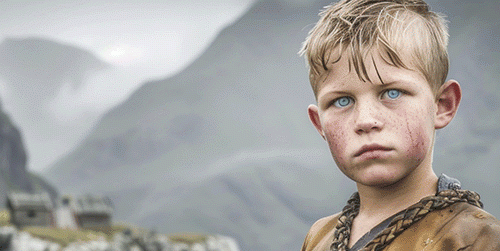
Prince Erik, The Warrior
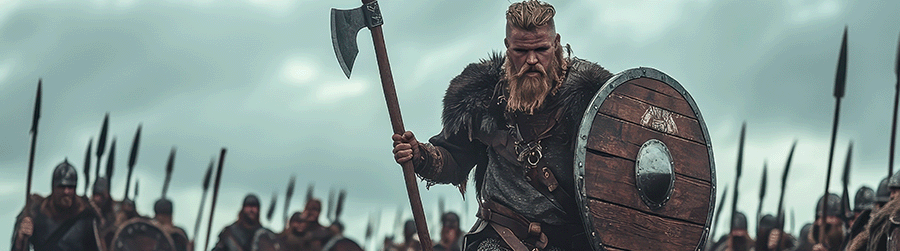
The sixteen winter storms had carved Erik into a quiet, watchful shape. His world had been the whispering pines, the granite teeth of the mountains, and the two souls who moved through that solitude: Elsinka, whose eyes held the fog of futures unseen, and Sigurd, whose silence was as deep and sturdy as the wood he worked. Friendship, in the way boys his age seemed to have it—easy, loud, constant—was a foreign country. Then came the war-band’s training encampment, and Erik was deposited into a roaring, stinking, crowded longhouse.
The air was a permanent stew of woodsmoke, unwashed bodies, wet wool, and the metallic tang of sharpened steel. Benches lined the walls, claimed by the swift and the strong. The rest, a tangled mass of furs and men, huddled around the central hearth, a shifting, snoring beast of humanity. Erik, used to a sky so vast it made his thoughts feel small, felt the roof pressing down. He found a sliver of space near a drafty wall, his solitude now a tight, anxious knot in his stomach.
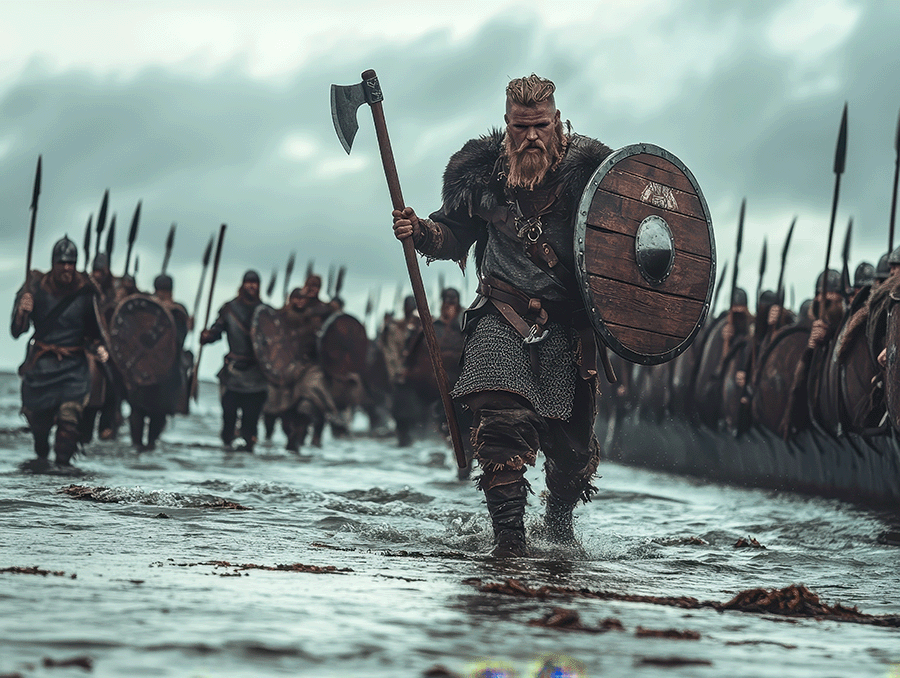
The first dawn was a grey slur of rain. Magnus, the king’s second-in-command, stood before them—a man carved from older, harder oak than the longhouse’s beams. His voice didn’t boom; it cut. “You are not men here. You are stones. And a pile of stones is useless. A wall, however, stops the tide.” The work was back-breaking: hauling sleds of slick logs and mountain stones up and down the muddy slope. The code was simple: you held, or the man beside you fell. Erik, used to solitary labor, fumbled the rhythm. A log slipped, nearly crushing Danr, a quick-grained boy with a grin that seemed permanently chipped.
“Watch yourself, mountain-goat!” Danr snapped, not unkindly, resetting his grip.
“Sorry,” Erik muttered, his face hot.
“Save it. Just pull.” Edda, her braid a dark rope down her back, moved beside him, her shoulder brushing his as they heaved. “Left on three.”
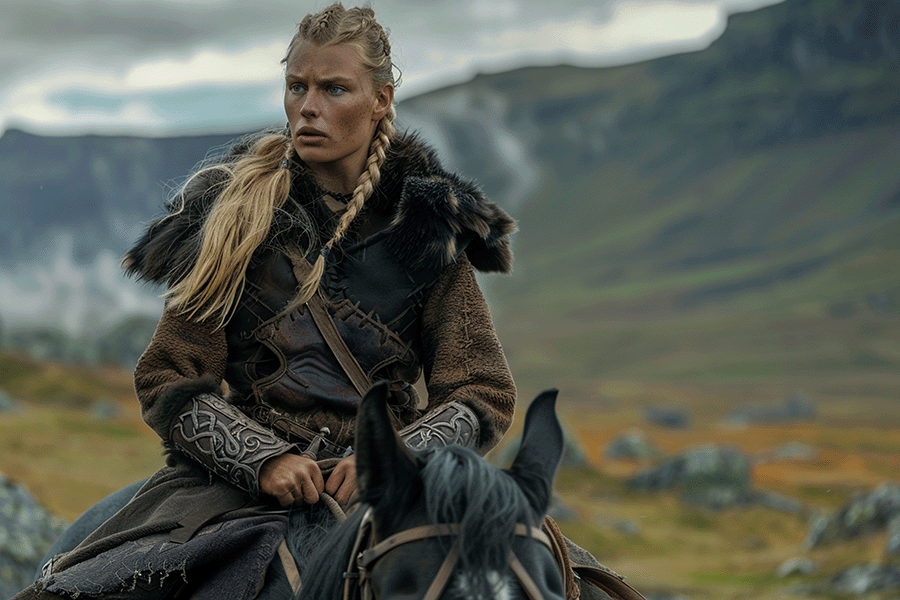
The days became a brutal liturgy. The thwack of axes on timber posts, the shriek of spears through air, the grunt of bodies locking in simulated combat on the springy field. Erik’s hands blistered, his muscles burned with a new, deeper fire. Yet in the archery butts, he found a familiar peace. The quiet focus, the stretch of the bow, the clean thump of arrow into straw—it was a solitary art in the midst of the crowd. He found he could silence the noise of the longhouse, could hit the bullseye until the targets were shredded.
Magnus watched, his scrutiny a physical weight. “A sniper’s skill. Useful. But a warrior who only shoots from distance is a farmer with a fancy bow. You’ll learn to stand in the shield-wall.”
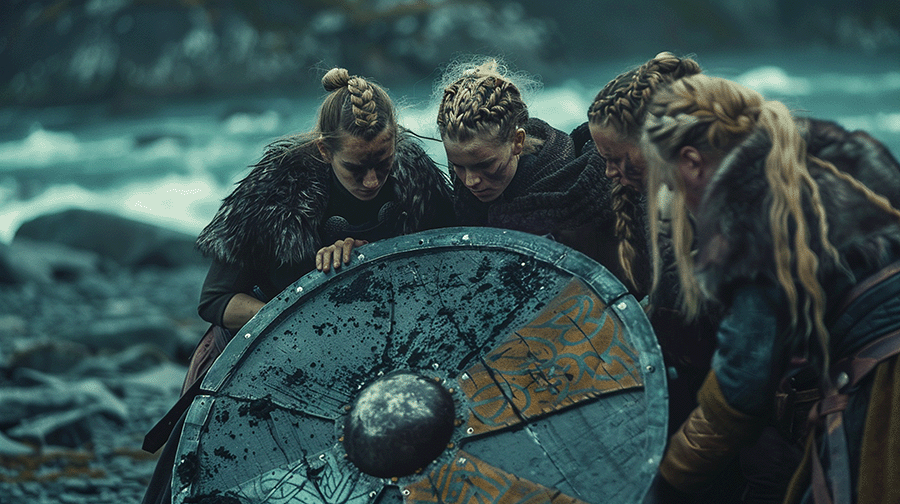
Then King Akbar would come. He didn’t ride in a glistening entourage; he walked from the royal hall, his cloak damp with the same mist. He was a broad-shouldered man, his face a map of old scars, his eyes the color of storm clouds. He spoke little, but when he did, the training ground fell silent. He would take a trainee’s wooden sword, move with a terrifying, economical grace, and demonstrate not just a block or a strike, but the intent behind it—the feint that became a killing blow, the step that disrupted a formation.
One afternoon, he paired Erik with a tall, aggressive boy named Rolf. Rolf charged, roaring. Erik, instincts from shadowing elk in the woods, danced back, drawing hisPractice-sword. Akbar stopped them with a raised hand. “Erik, you flee. This is the way of the wolf, not the warrior. In the shield-wall, there is no behind you. Only forward, or dead. Rolf, you are a storm with no direction. Your charge has no plan. You both think of the other. Think of the line.” He made them repeat the exchange until their muscles trembled, until Erik understood that his individual skill was a tributary; the river was the wall.
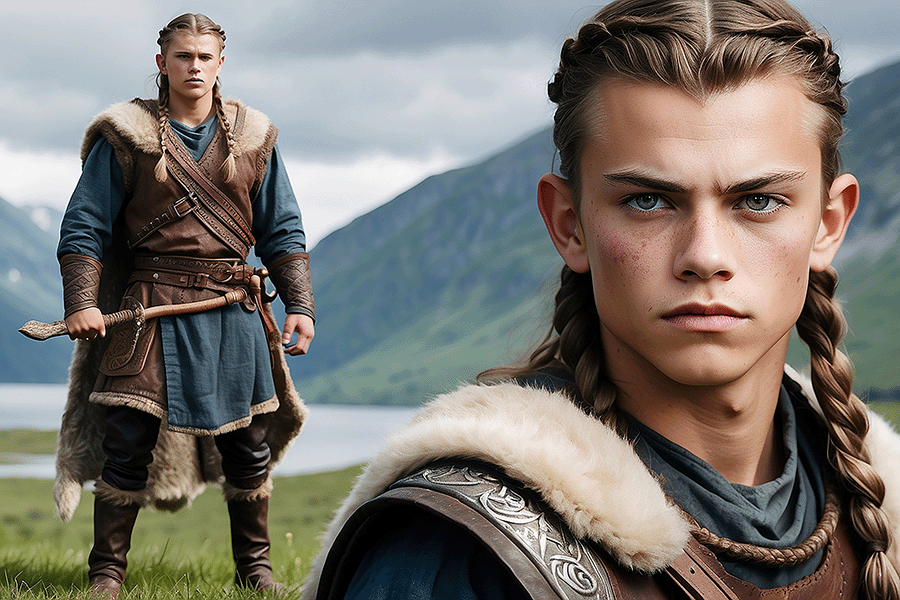
Slowly, the foreign country of the longhouse began to feel like home. Danr’s loud jokes became a familiar drumbeat. Edda’s dry humor was a secret code. They became his shield brothers, their trust forged not in words, but in shared weight, in catching a slipping weapon, in the unspoken understanding during drills. The ache of solitude faded, replaced by a different warmth—the heat of shared struggle and a fierce, protective loyalty.
The trial came on a day thick with the threat of snow. Magnus gathered them on the high ground overlooking the training field, now strewn with obstacles and manned by experienced warriors with wooden weapons. “The wall is tested in chaos,” Magnus said. “You will descend into the vale. Your only goal: reach the flag on the far ridge. The other side will block you. Fight as one, or fail as many.”
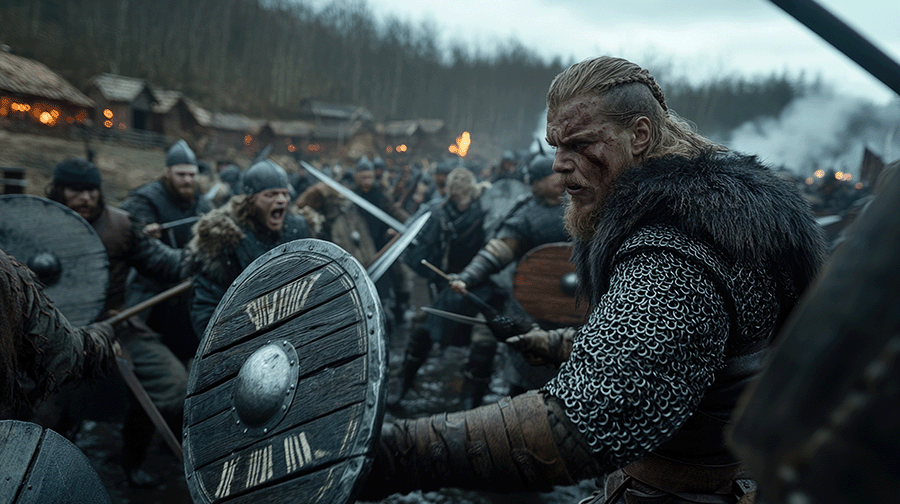
The signal horn sounded. Erik’s heart hammered against his ribs. The descent was a clumsy scramble. Then smoke, thick and acrid, billowed from set fires, blinding them. Shouts erupted. Wooden swords clashed. Erik’s archer’s eye saw the gaps, the loose formations. He wanted to slip away, to pick off the “enemy” from a distance—the old Erik’s way. Danr was locked in a struggle, edging backward. Edda was surrounded.
The code Magnus had drilled into them echoed: the line. The individual was nothing. Erik didn’t seek a clear shot. He shouldered into the space beside Edda, his practice-axe coming up in a block for her. “Left flank weak!” he roared, pointing. Danr, hearing him, slammed his shoulder into the gap Erik indicated. It wasn’t a brilliant solo move; it was a clumsy, desperate shove in concert. But it created a single, roaring moment of pressure. The “enemy” line buckled, and they poured through, a messy, shouting tide, scrambling for the flag.
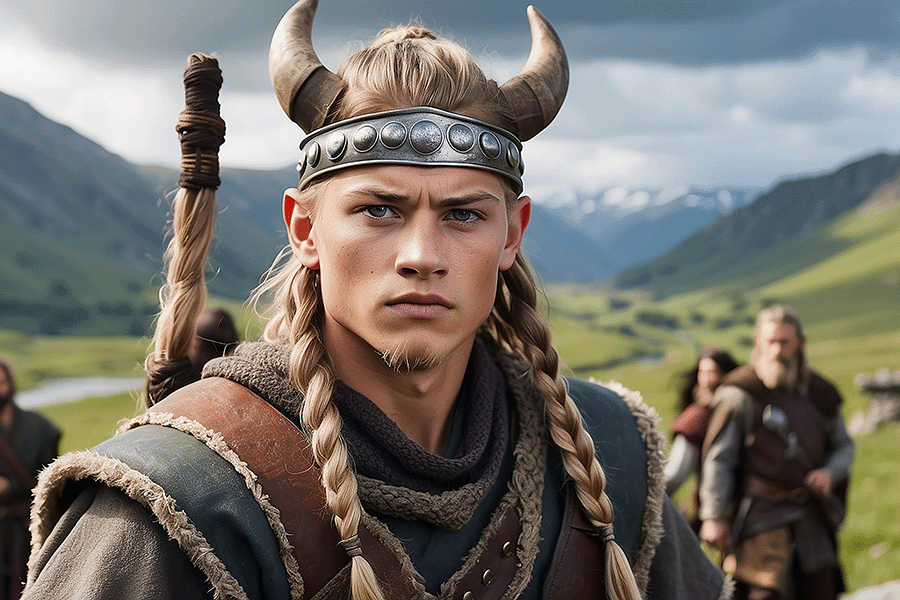
Touching the rough cloth, gasping, Erik found himself surrounded by his bloodied and grinning brothers. They had done it. Not as individuals, but as a wall with one mind.
That night, back in the smoky longhouse, the victory felt different. The cheers were louder, the shared ale tasted sweeter. Erik lay on his hard bench, listening to the familiar snores and murmurs. He thought of the silent mountain cabin, of Elsinska’s prophecies and Sigurd’s steady hands. But here, in the press of warm bodies, he felt not crowded, but anchored. The warrior’s path was not to shed one’s old self, but to fold the loner’s keen sight and patience into the rhythm of the wall.
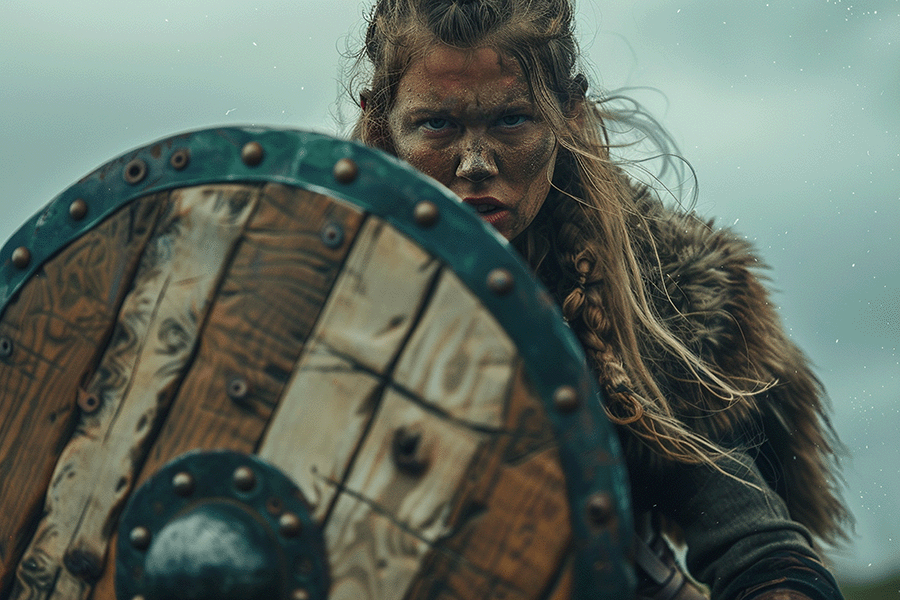
King Akbar passed by their bench later, pausing. His stormy eyes took in Erik’s dust-caked face, the fresh bruises on his knuckles, the easy way Danr clapped his shoulder. The king gave a single, slow nod—not to the archer, not to the prince, but to the stone that had found its place in the wall. Erik met his gaze, and in that quiet acknowledgment, he understood. He was not leaving his solitude behind; he was learning to carry it, a sharp and silent strength, for the good of the many. The longhouse was no longer a prison of noise, but the drumbeat of a new, stronger heart.