Lola & Lina

Lola the ladybug was a creature of pure joy, a tiny jewel against the emerald leaves. Her days were a symphony of movement and melody, as she pirouetted through the air, a whirlwind of ruby and black, her voice a sweet, high hum that echoed through the garden. From the blushing rose to the sun-kissed daisy, Lola danced and sang, her spirit as light as her delicate wings.
One breezy afternoon, caught in an ambitious spin a little too close to a thorny branch, Lola stumbled. There was a sudden, sharp pain, a tearing sound, and she plummeted. She landed hard on the soft earth, her world tilting. A gut-wrenching glance revealed the horror: her beautiful right wing, once iridescent and strong, was now a ragged, mangled mess. A deep, shimmering tear ran through its delicate membrane.
Distress bubbled up, raw and overwhelming. Lola cried, big, fat ladybug tears rolling down her small face.
“Oh, no! My wing! I can’t fly!” Her voice was a desolate whisper, choked with despair. The thought of being grounded, of no longer soaring from flower to flower, of her songs silenced by her inability to dance in the air, was unbearable.
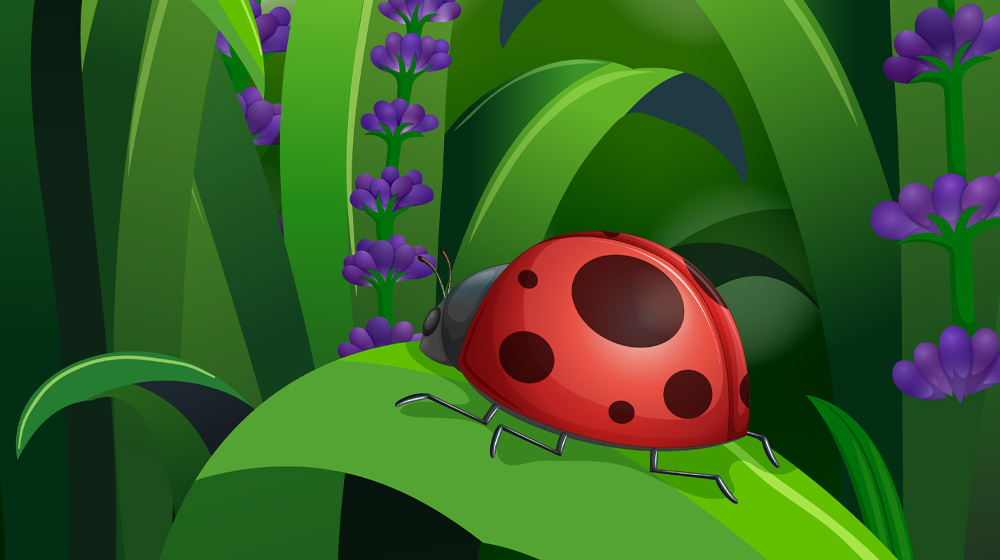
Her mournful cries carried on the gentle breeze, reaching the quiet web of Lina the spider. Lina, usually avoided by the other garden creatures who scurried away at her approach, paused her intricate weaving. Cautiously, with a soft rustle of silken legs, she descended from her web. Her eight eyes, usually perceived as menacing, held a glint of concern as she saw the tiny, trembling ladybug.
“What troubles you, little one?” Lina’s voice was surprisingly soft, a gentle vibration.
Lola looked up, her eyes wide with fear and surprise. A spider! The very thought sent shivers down her antennae.
“Go away!” she whimpered, trying to sound brave, though her voice shook.
But Lina’s gaze was kind, without the predatory gleam Lola had been warned about.
“My wing,” Lola whimpered, holding it up for inspection. “It’s torn. I can’t fly anymore.”
Lina leaned closer, examining the damage with a practiced eye.
Lina didn’t move, but she didn’t come closer either. “I could help,” she offered gently, her front leg gesturing vaguely towards Lola’s damaged wing. “I’m very good with fine threads. I could mend it.”
She gestured to the gossamer strands of her web, delicate yet strong.
Lola hesitated, her tiny heart thumping like a drum against her ribs. Mended by a spider? It went against everything she’d ever heard. Spiders were… dangerous. They ate insects! But Lina looked genuinely friendly, her offer sincere, and Lola’s desperation outweighed her fear. What choice did she have? She couldn’t fix it herself.
“You… you would?” she stammered, hope flickering in her eyes.
Lina sat down, seemingly sensing the shift in Lola’s resolve. “I have very fine silk, Lola. Finer than anything you can imagine. And nimble claws. I could weave the torn edges together, make it strong again.” Her eyes met Lola’s, kind and earnest. “I wouldn’t hurt you. I promise.”
For the next few days, the garden witnessed an unusual sight. Lina, with her silken threads and nimble legs, visited Lola every morning. With painstaking care, she began to stitch the torn wing. Each delicate strand was woven with skill, pulling the edges of the tear together, strengthening the fragile membrane. As Lina worked, they talked.
As Lina worked, they talked. Lola, initially wary, found herself opening up. She spoke of her love for the wind, her dreams of dancing through sunbeams, her fears of being earthbound. Lina listened intently, occasionally offering quiet words of encouragement. And in return, Lina began to share bits of her own life. She spoke of the quiet solitude of her web, the intricate patterns she loved to create, and the simple beauty of a dew-kissed morning
Lina was surprisingly good company. She spoke of the patterns of the dew on the leaves and the quiet beauty of the moonlight on her web. Lola, in turn, told her about the various scents of the flowers and the thrill of a perfect pirouette. Lina revealed her secret: she was lonely. The other creatures, frightened by her appearance and her web, always scurried away. They thought she was going to eat them.
“But I wouldn’t dream of it,” Lina sighed one afternoon, carefully knotting a strand.
“I’m a vegetarian. I only eat dew drops and the occasional pollen flake. My webs are for art, not for traps.”
Lola felt a pang of sympathy. She had misjudged Lina too, based on old stories.
Finally, the day arrived. Lina declared the wing mended, the tear a barely visible seam.
“Try it,” she encouraged, a rare smile gracing her face.
Lola took a deep breath, wiggled her antennae, and cautiously unfurled her wings. She beat them slowly at first, then faster, faster. With a surge of exhilaration, she lifted off the ground! Higher and higher she rose, the air feeling wonderful against her restored wing. It was perfect! Strong and true, as if it had never been torn. Lola swooped and soared, a joyous red flash against the blue sky, her heart overflowing with gratitude.
She landed gently before Lina, her eyes shining.
“Oh, Lina! It’s wonderful! Thank you, thank you!”
To express her boundless thanks, Lola launched into a dazzling aerial display. She spun and twirled, a blur of crimson and black, weaving intricate patterns in the air, her voice rising in a clear, joyful song that filled the garden. She danced and sang only for Lina, a private concert of gratitude and friendship.
From that day on, an unlikely but beautiful friendship bloomed. Lola would often visit Lina, bringing her news of the garden, sometimes even a sweet flower petal. Lina, no longer lonely, would weave beautiful, intricate patterns in her web, humming softly as she listened to Lola’s songs. The other creatures might still give Lina a wide berth, but Lola knew the truth: Lina was a kind, gentle soul, and the best friend a ladybug could ever wish for.