Viking Ships Were Not “Inferior” but Simply Different
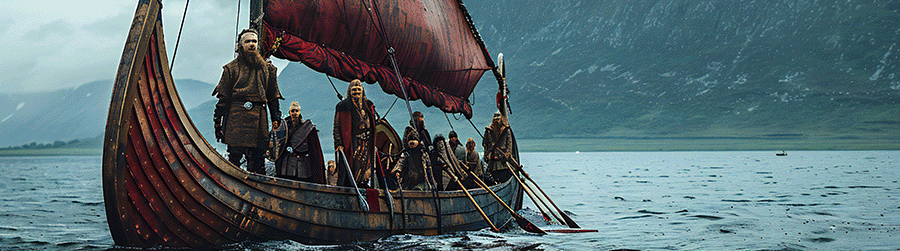
When you picture a Viking longship slicing through the North Sea, the image that most people keep in mind is a sleek, low‑lying hull whose wooden planks overlap like the scales of a dragon. That overlapping technique is called clinker (or “lap‑strake”) construction. By contrast, the famous English warships Mary Rose and Victory were built using caravel construction, in which a solid internal frame is erected first and the planks are then fastened to it, leaving a smooth outer skin.
At first glance the dominance of caravel in later medieval shipbuilding might suggest that clinker was a primitive, “poorer” method. The reality is more nuanced. Clinker and caravel each have their own strengths and weaknesses, and the Viking preference for clinker was a logical response to the materials, tools, and sailing conditions they faced. In this post we will compare the two techniques, explore why they demand different kinds of timber, and explain how each method influences a ship’s weight, flexibility, and overall performance.
The Basics of Clinker Construction
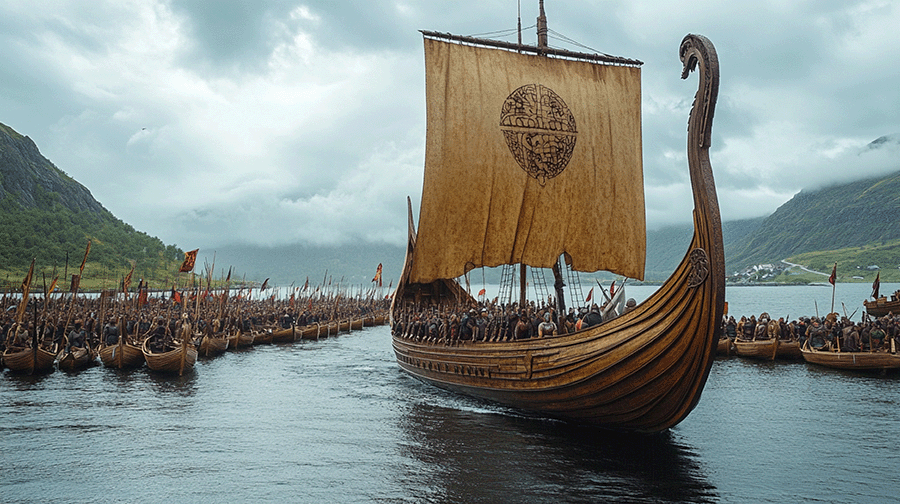
In a clinker‑built vessel the hull is assembled outside‑in. The shipwright starts with the first strake (the lowest plank) and nails the next one on top of it, so that each board overlaps the one below by a few inches. The edges are fastened together with iron rivets or wooden pegs, and the overlapping “lap” creates a continuous, interlocking shell. Only after the outer skin is complete does the builder insert the internal frames (ribs) through the gaps between the strakes.
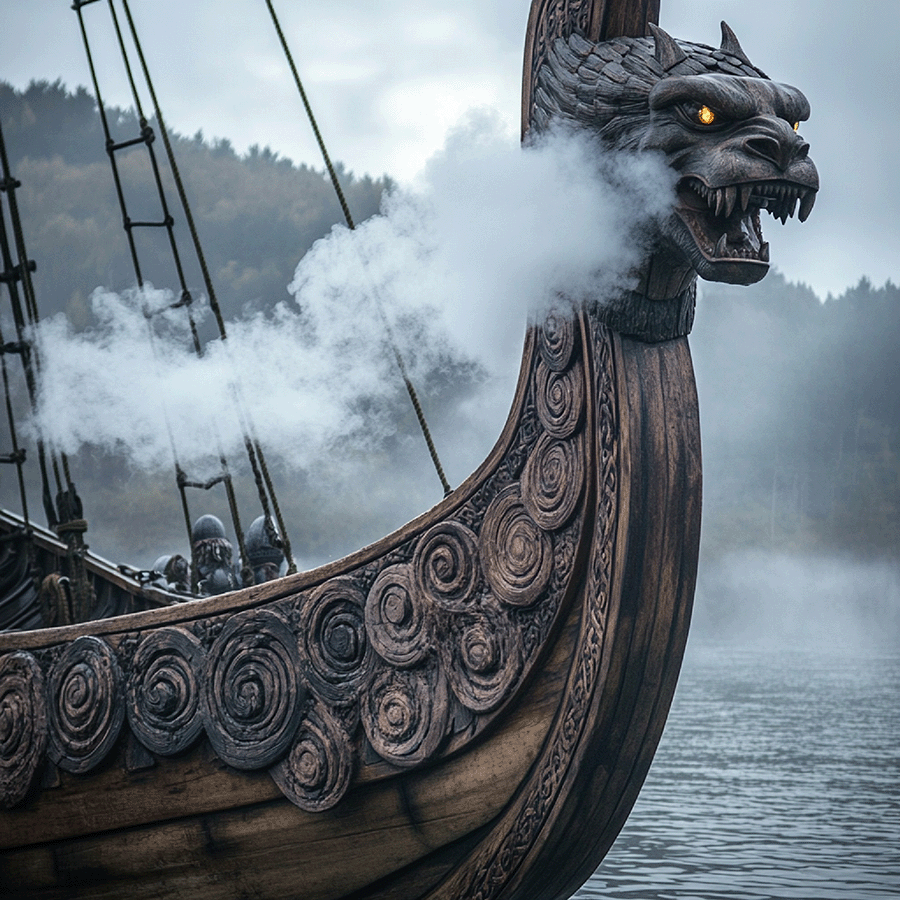
Because the hull itself bears most of the structural load, the frames can be relatively light. Their main job is to keep the planks in the correct shape and to provide mounting points for the mast, oars, and other gear. The overlapping planks also act like a series of small ribs, distributing stresses along the hull and giving it a surprising amount of flexibility. A Viking longship could bend a few centimeters without cracking—a useful trait when riding over the choppy, wind‑driven waves of the North Atlantic.
Caravel Construction: Frame First, Skin Second
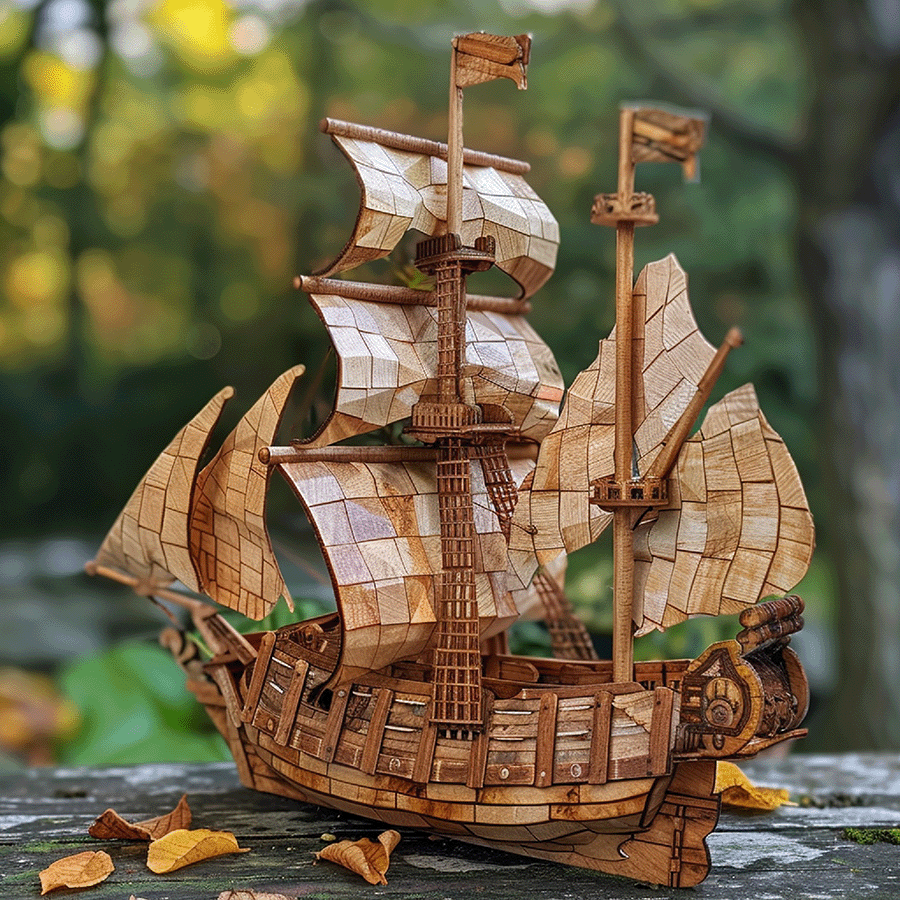
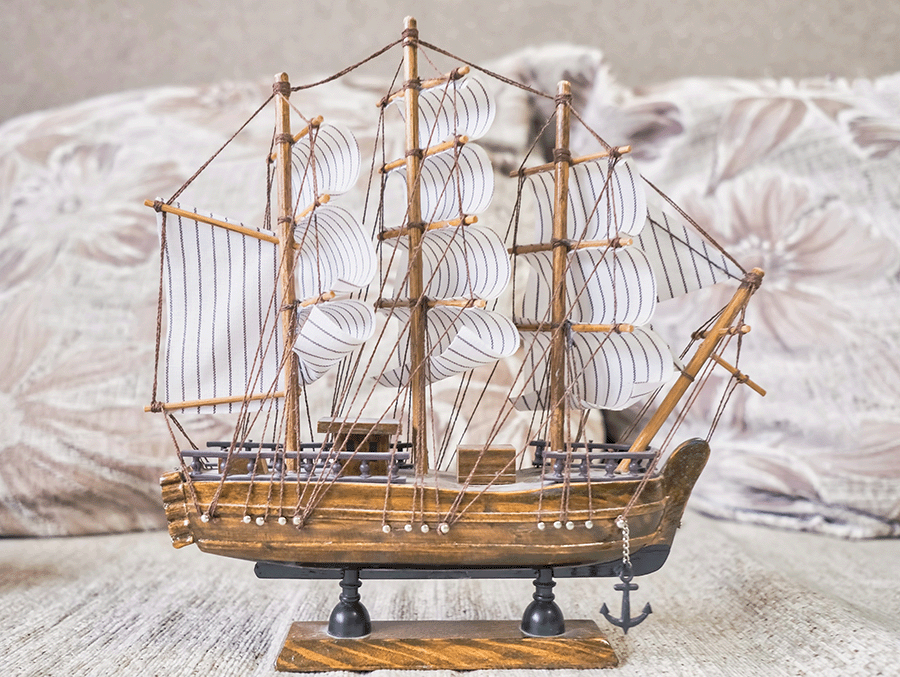
Caravel building takes the opposite approach: the internal skeleton is erected first. Thick, sturdy ribs and a sturdy keel are laid out, forming a rigid framework that defines the hull’s shape. Once this “skeleton” is in place, the outer planks are attached edge‑to‑edge, producing a smooth, flush surface. Because the planks are joined without overlap, the hull relies on the frame to hold everything together; the boards are essentially a water‑tight skin rather than a structural element.
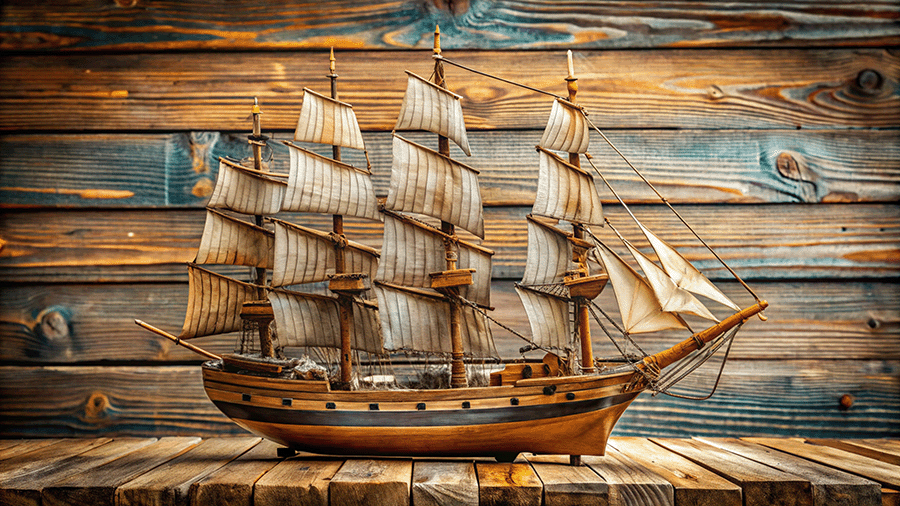
This method allows shipwrights to use any quality of timber. Since the planks are not required to carry structural loads, even relatively soft or imperfect wood can be employed, as long as it can be made watertight. The smooth exterior also reduces drag, which is advantageous for larger, heavily armed ships that need to move efficiently under sail.
Wood Quality and Tooling: Why the Vikings Chose the Best Timber
One of the key differences between clinker and caravel is the requirement for high‑quality wood in the former. Because each plank in a clinker hull must be strong enough to support the hull’s load and to transfer stresses to the overlapping neighbor, shipwrights traditionally selected straight‑grained, knot‑free oak or pine. The wood was split along the grain (often with an axe or adze) rather than sawn, preserving the natural fiber direction and maximizing both strength and flexibility.
Caravel construction, by contrast, can make use of sawn timber. Saws—particularly the wide, toothed varieties introduced in the later Middle Ages—allow shipwrights to cut boards to any desired shape, regardless of grain orientation. While this flexibility simplifies the supply chain, sawing across the grain can weaken the wood, making it less elastic. In a caravel hull the frame does most of the heavy lifting, so the loss of timber strength is less critical.
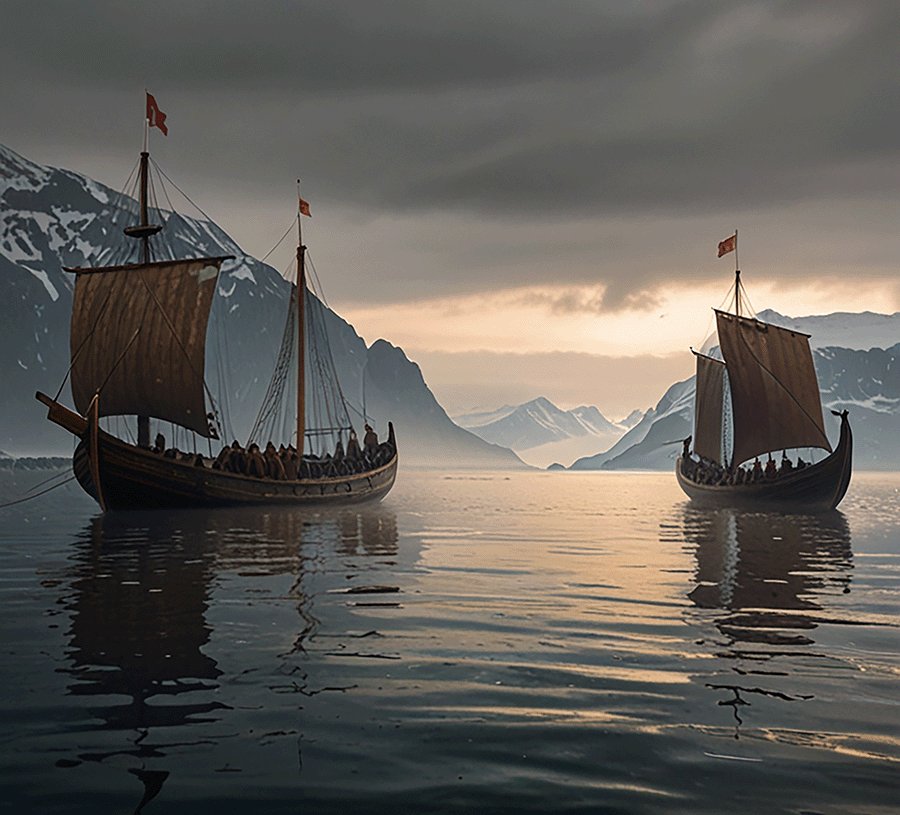
From a Viking perspective, the availability of quality timber in Scandinavia, combined with a tradition of axe‑based woodworking, made clinker the natural choice. The Vikings did not have widespread access to large, saw‑cut timber stocks, nor the industrial capacity to produce countless iron frames. Their tools were simple—axes, adzes, chisels, and wooden mallets—but they were used with remarkable skill. By following the grain, a Viking shipwright could produce a hull that was both light and resilient, perfectly suited to quick raids, coastal navigation, and open‑sea voyages.
Weight, Flexibility, and Performance on the Waves
A frequent claim in popular discussions is that caravel ships are “heavier” and therefore slower or less comfortable than clinker vessels. The truth is that weight distribution differs rather than total weight. Because clinker hulls rely on overlapping planks for strength, the internal frames can be thin, resulting in a lighter overall hull. This lightness translates into several performance benefits:
Speed in Shallow Water – A shallow draft and low displacement let a Viking longship glide over tidal flats and river estuaries, enabling surprise attacks.
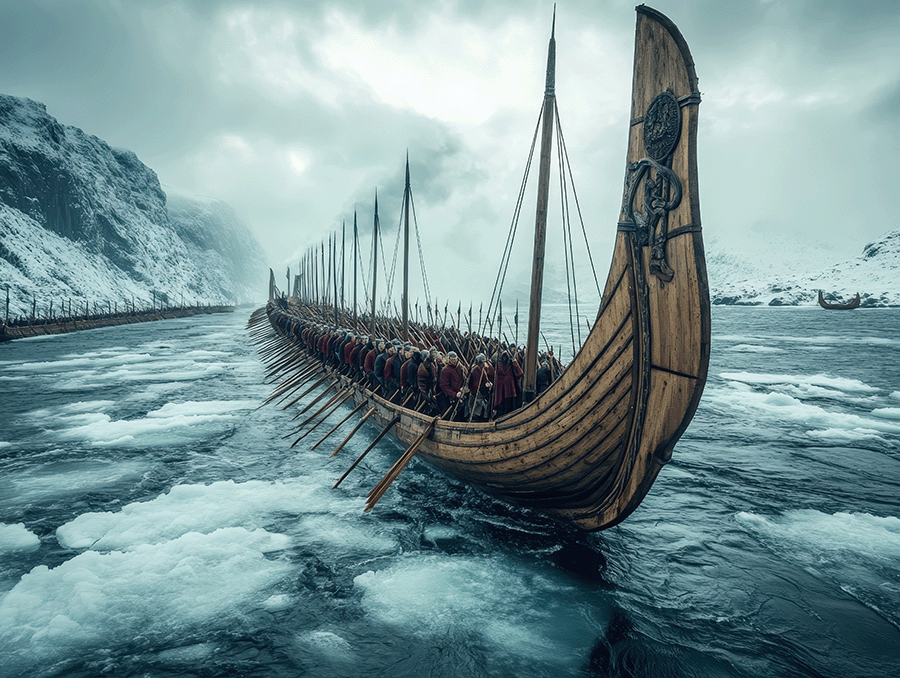
Ease of Rowing – Lighter hulls demand less effort from the rowers, an essential factor when a crew of 30–50 men must sustain high speeds for hours.
Flexibility – The overlapping planks act like a series of tiny springs, allowing the hull to absorb wave impacts and “ride on top of” the swell rather than being forced down into it. This gives the ship a smoother, more “gliding” motion, which was often described in sagas as the ship “skimming the sea like a serpent.”
Caravel ships, with their robust frames, are stiffer. A stiff hull can be advantageous for large vessels that carry heavy artillery, because it prevents the hull from flexing under the weight of guns and cargo. However, a stiff hull also transmits wave energy directly to the deck, making the ride feel more “bumpy.” For a warship like Victory, which needed a stable gun platform, this stiffness was desirable. For a Viking raiding party that prized speed and maneuverability, the extra bounce would have been a disadvantage.
The Historical Shift from Clinker to Caravel
By the late Middle Ages, caravel construction began to dominate larger shipbuilding projects across Europe. Several factors contributed to this transition:
Growth of Trade and Naval Warfare – Bigger ships required larger cargo holds and more gun decks. The caravel method’s strong internal skeleton could support these loads more safely than a clinker hull.
Improved Saw Technology – The spread of water‑powered sawmills in the 12th and 13th centuries made sawn timber cheap and abundant, reducing the need for premium, hand‑split planks.
Changing Material Availability – Deforestation in parts of Scandinavia and the British Isles meant that high‑quality, knot‑free timber became scarcer, nudging builders toward a method that tolerated lower‑grade wood.
Nevertheless, the shift does not imply that clinker was an inferior technology. It simply reflects different design priorities. When the focus is on speed, shallow draft, and adaptability to rugged coastlines, clinker shines. When the priority moves to massive cargo capacity, heavy armament, and long‑term durability in calmer seas, caravel takes the lead.
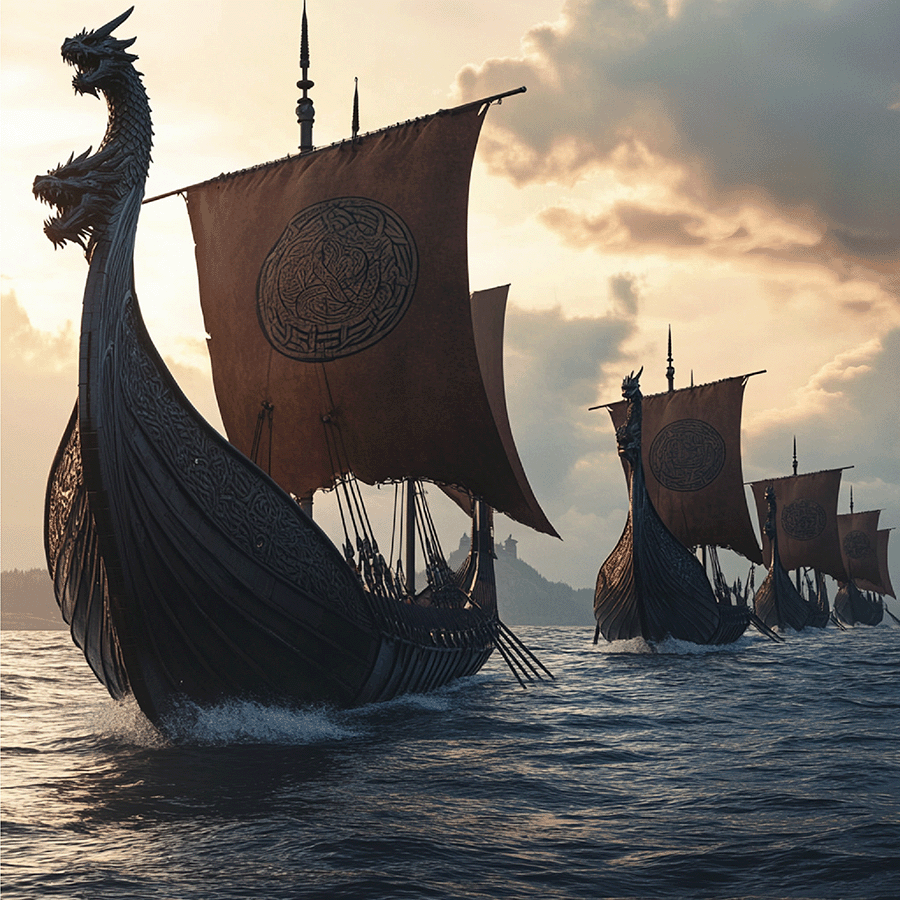
The debate over whether clinker shipbuilding was “poorer” than caravel is a false dichotomy. Both techniques are optimally adapted to their respective cultural, material, and environmental contexts. Viking longships leveraged the strengths of clinker construction—light weight, flexibility, and the ability to use the best available timber with simple tools—to become the legendary fast, agile vessels that dominated Northern seas for centuries.
Caravel shipbuilding, on the other hand, offered a route to larger, sturdier ships that could bear heavy guns and cargo, made possible by the advent of sawmills and a broader supply of timber. The eventual dominance of caravel in the late medieval period reflects the evolving demands of commerce and warfare, not a universal superiority over clinker.
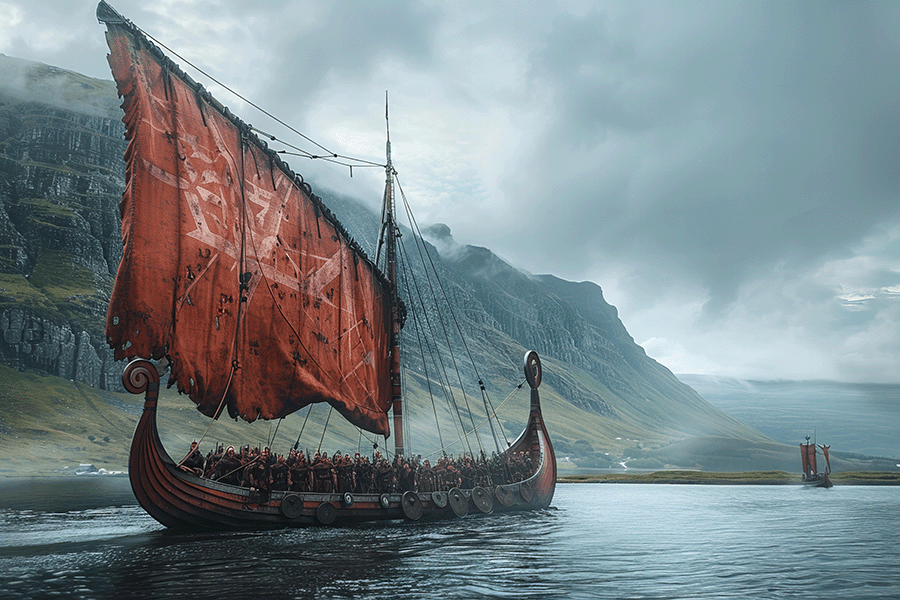
In the end, the story of these two building methods reminds us that technology is never absolute; it is always a response to the resources, tools, and goals of the people who use it. The Viking longship’s elegant overlapping planks continue to captivate us not because they were “better” or “worse” than the smooth hulls of Mary Rose and Victory, but because they perfectly embodied the values and needs of their builders—speed, lightness, and the daring spirit of the North.