Alikant: The Dragon From Cabo San Lucas
I have always liked to think that the world is a series of coincidences waiting for a story to bind them together. When I booked a flight to Cabo San Lucas for a week‑long “sun‑and‑sand” retreat, I was looking for nothing more than a break from spreadsheets, conference calls, and the endless buzz of a city that never seemed to pause. I wanted warm water, a good margarita, and maybe a sunrise over that famous rock formation that photographers call El Arco. I never imagined that the tides of my blood would rise up and pull me toward a legend that had been sleeping in plain sight for centuries.
The moment the plane’s wheels kissed the runway, I felt a subtle tremor under my feet—like the ground was humming a low note I could not quite place. I laughed it off, chalking it up to nervous anticipation, and headed straight for the beachfront promenade. The sun was already climbing, painting the sky in shades of gold and rose. The sea was a sheet of liquid glass, broken only by the occasional splash of a dolphin or the distant hum of a jet ski. Tourists were already assembling in clusters, phones out, ready to capture the perfect shot of the arch that juts out of the water like a giant’s elbow.
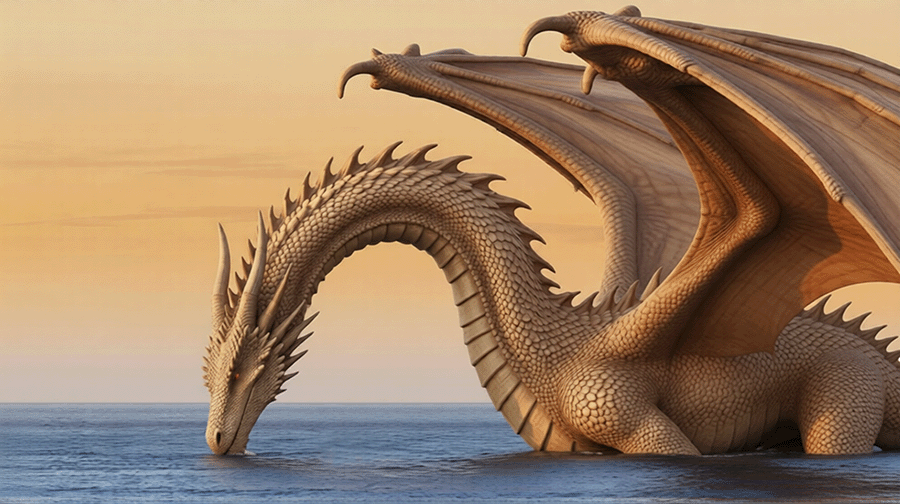
I found a spot on the sand, spread my towel, and set my camera to “auto” while I let the salty breeze tangle my hair. People around me talked in a multitude of languages—Spanish, English, Korean, Hindi—each voice a thread in a tapestry that stretched far beyond the horizon. I watched as a couple from Sweden, a family from Mexico, a group of friends from Japan, all converged on the same rock, each of them pointing, laughing, snapping pictures. It was a scene of shared wonder, the kind of moment that makes you feel you belong to something larger than yourself.
It was then that I first saw him.
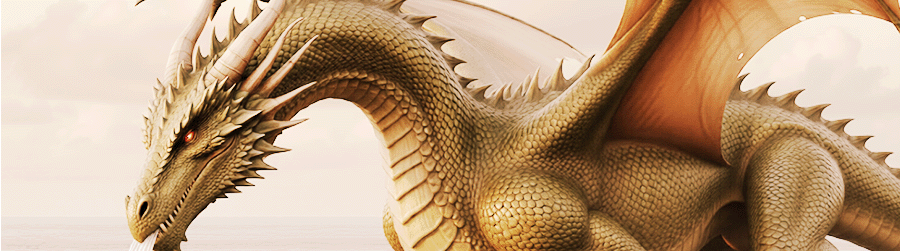
Alikant wasn’t a monstrous beast that roared and burned villages, as the myths in the old books say. He was a dragon of gentle proportion, his scales a shimmering tapestry of sea‑green and sunset amber that reflected the light like a thousand tiny mirrors. He lay coiled at the base of the arch, his massive body almost hidden among the crags and kelp. Only those who looked for him would see the faint outline of his wings resting against the stone, the slow rise and fall of his chest as he breathed, the glint of his eyes—eyes that seemed to hold the entire history of the world in their depths.
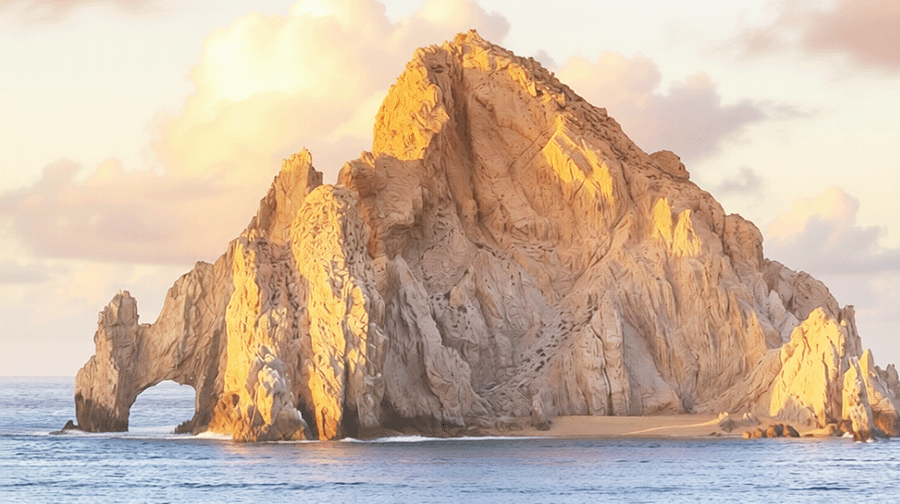
I should have turned my camera toward him, taken a photo, and posted it with a caption that would have gone viral in an instant. Instead, I felt a strange compulsion to stay still, to observe him from a respectful distance. My heart hammered in my chest, not from fear but from a feeling I could only describe as reverent recognition.
In the crowd, an old man with weathered skin and a weather‑worn smile approached me. He wore a simple white shirt and a pair of well‑worn sandals, and a silver necklace with a small pendant that looked like an interlaced knot.
“Do you see him?” he asked in a voice that sounded like the wind over dunes. “The dragon that guards the arch?”
I nodded, too stunned to speak. He chuckled softly and settled beside me, his eyes never leaving Alikant.
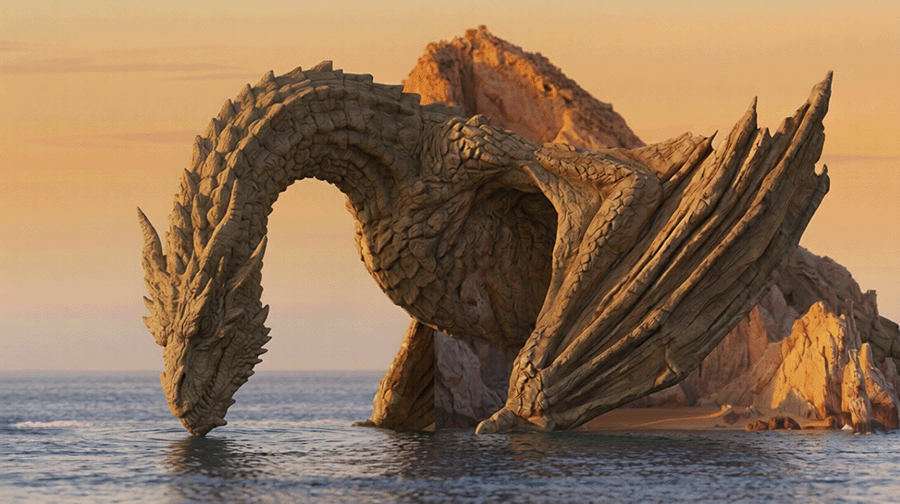
“My name is Mateo,” he said, “and I have tended this place for as long as my family has. The dragon has always been here, hidden in plain sight, because he is waiting.”
“Waiting for what?” I asked, the words finally finding their way.
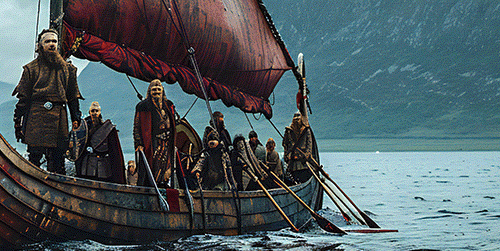
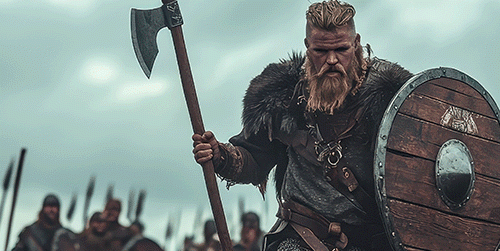
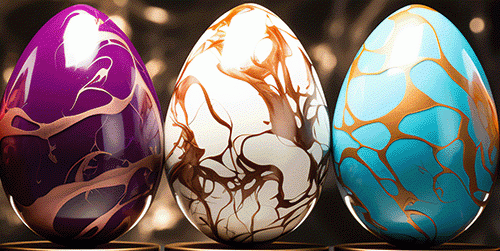
“Waiting for the blood to remember,” Mateo replied, a distant glint appearing in his eyes. “Centuries ago, a Norse prince named Erik of Hrafnnes and a Maya princess named Citlali traveled across oceans, guided by the gods. They found each other in the frozen fjords of Vinland. The gods—Njörðr and Itzamná—promised them that their names would echo through time, that their descendants would return here, drawn by blood and by destiny, if they cared for four dragon eggs. Alikant was the first to hatch.”
I felt my breath catch. I had heard a vague story about a Viking and a Maya in a travel brochure once, a footnote that seemed more like an anecdote than a myth. I had never believed in gods or bloodlines, but the weight of Mateo’s gaze, the quiet presence of Alikant, and the sudden tug in my own veins made the story feel impossibly real.
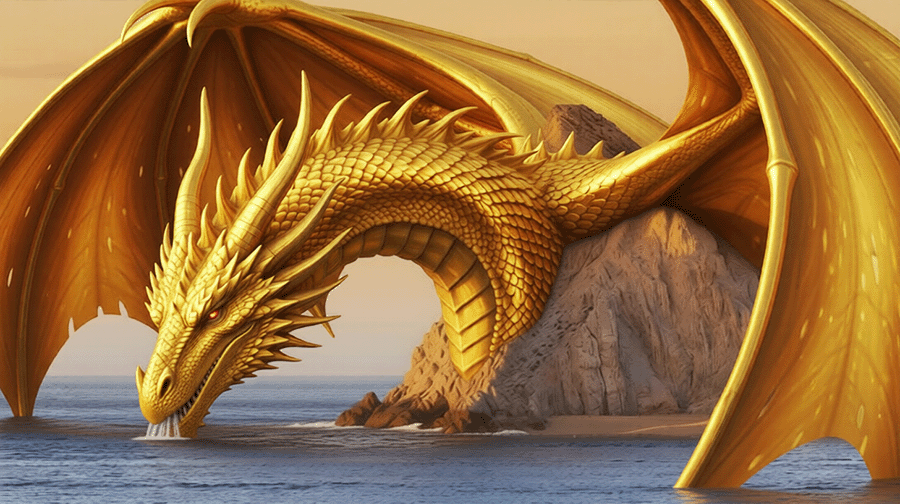
“Your ancestors…” Mateo continued, his voice softening. “they are calling you… They are calling them. They don’t know that they are related somehow to Erik and Citlali.”
“The blood insists, persistently” Mateo said, as if reading my thoughts. “It pulls you toward this place, makes you stay, makes you look. You come here to honor them, and you may not know it. You and them… you are their descendant. You come to pay a visit as the gods demand. A promise the gods made”.
Maybe I have had too many margaritas, maybe I am in a good mood, but I believe him. I did take a DNA test once… And there is Norse in me… Coincidence perhaps?
I laughed, the sound surprising even me. “Mateo, you’re talking about a princess and a prince from some half‑forgotten legend, and a dragon that could probably eat the whole peninsula in one bite. How does that make any sense? Look around—Mexicans, Japanese, Americans, Canadians, Chinese… we’re not all related. We’re just tourists with sunburns and bad sunscreen.”
Mateo tipped his hat back, exposing a shock of silver hair that caught the sun. “Vikings were the original jet‑setters. They weren’t just raiding monasteries; they were mapping the world, trading amber for silk, and, most importantly, leaving behind children wherever they dropped anchor. Their blood ran like a river, spilling into every shore, every culture.”
“Alright,” I said, feeling the lightheadedness of the margarita mingle with the rising tide of imagination, “let’s assume you’re right. What does that mean for us? Do we have to do a ritual? Offer something to Alikant? Or just… stand here and stare at the ocean, feeling connected?”
Mateo’s eyes crinkled. “We do what the gods asked: we remember. We tell the story. A child in Tokyo hears about it, a kid in Vancouver reads it on a travel blog, a fisherman in Veracruz tells it to his grandson. The story lives, and the promise remains. No grand altar, no sacrifice—just a shared narrative that binds us.”
We fell into a comfortable silence, broken only by the occasional gull’s cry and the gentle slap of waves against the shore. I glanced around. A Mexican family built a sandcastle that resembled a dragon’s head; a Canadian couple, both in hiking boots, were taking selfies with a cardboard cutout of Alikant that a local vendor had set up; a Chinese elderly man, his weathered hands ink‑stained, was sketching a dragon in charcoal on a napkin; a group of American backpackers, their backpacks emblazoned with “Adventure Awaits,” were arguing about whether the dragon was fire‑breathing or ice‑breathing. Each of them, in their own universe of concerns—sunburn, lost luggage, Instagram likes—seemed to be part of something larger, if only for a moment.
“Do you ever feel like you’re just a character in someone else’s story?” I asked, half‑joking, half‑curious.
Mateo considered the question, his gaze drifting to a lone seagull perched on a weathered driftwood. “All of us are characters, my friend. The trick is to enjoy the page we’re on. If the gods promised a dragon, maybe they’re just giving us an excuse to imagine, to connect, to laugh at the absurdity of life. Look at us—talking about dragons while the sun sets behind the sea cliffs. That’s a story worth telling.”
I nodded, feeling a sudden wave of gratitude toward the universe, however chaotic or benevolent it might be. The sky was now bruised purple, streaked with gold, as if the sun were pulling a blanket over the day and leaving a trail of fire behind. Somewhere out there, beyond the horizon, the ocean must have swallowed the dragon’s roar a long time ago, but the echo lingered—soft, yet unmistakable.
“Maybe the dragon is inside each of us,” I mused. “A fire we carry, a story we keep alive. Not a literal beast, but a metaphor for our shared humanity.”
Mateo chuckled, giving his bottle a final, reverent tilt. “Exactly. And the best part? You don’t need a magic sword or a prophecy to feel it. A margarita on the rocks, a sunset, a good conversation—those are the spells.” There is a book about it if you want to give it a gander or click the button below.