Norse Axe
When the first frost of winter brushed the fjord with a thin veil of ice, I—Erik, son of Akbar—stood in the long shadows of the forge, the heat licking the night air like a living thing. The clang of hammer on iron was a drumbeat to my heart, a reminder that the weight of my lineage rested not on a crown but on the steel I would soon bear.
My father’s beard was still thick with ash when he first taught me to shape a haft. “A blade is nothing without its spine,” he would rasp, his voice as rough as the oak that we split for firewood. “A good axe is a balance of bite and grace. Let it sing, and it will sing for you in battle.”
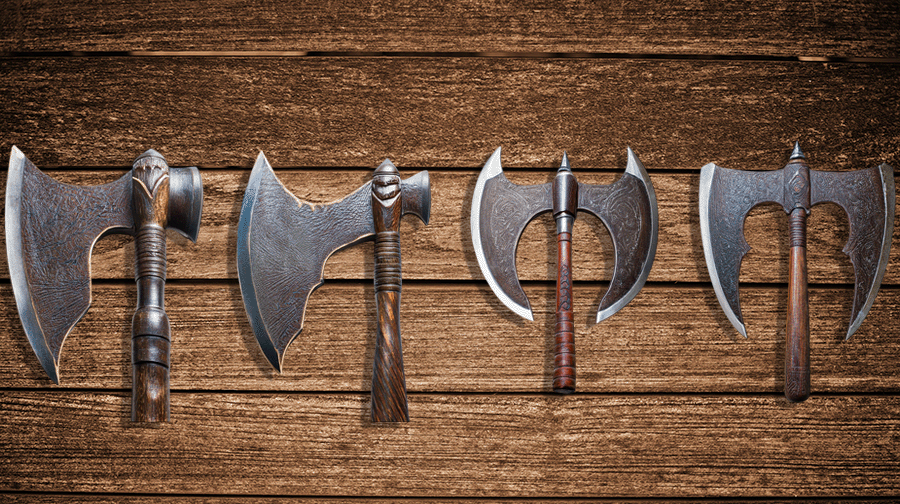
I watched the blacksmith’s fire swallow the raw iron, turning it a ruby‑red that seemed to pulse with its own life. From the furnace emerged three heads, each a promise of a different destiny:
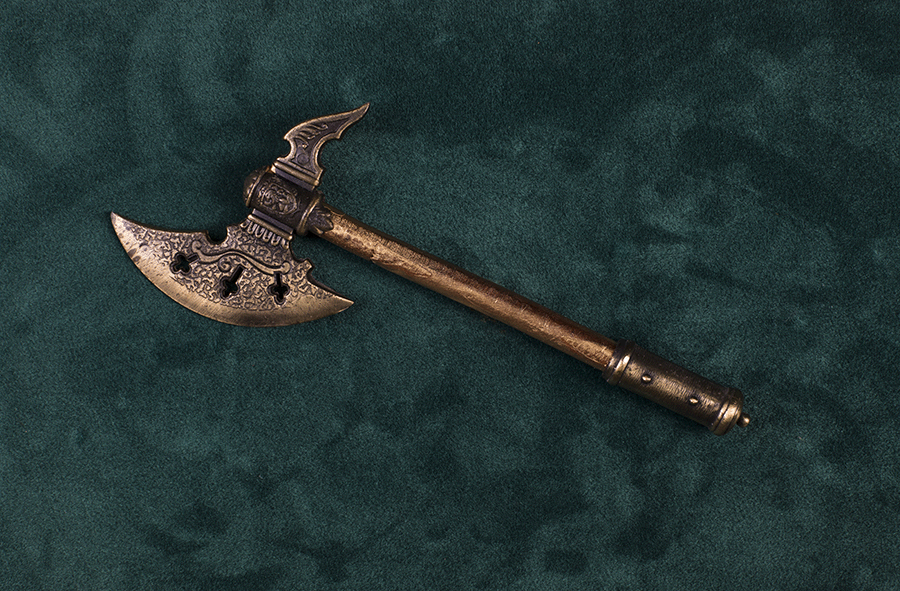
The Skeggøx – a bearded axe with a hook‑like lower blade, its edge thin and keen, its belly widening like a wolf’s mouth ready to snap shut on a shield or a thigh.
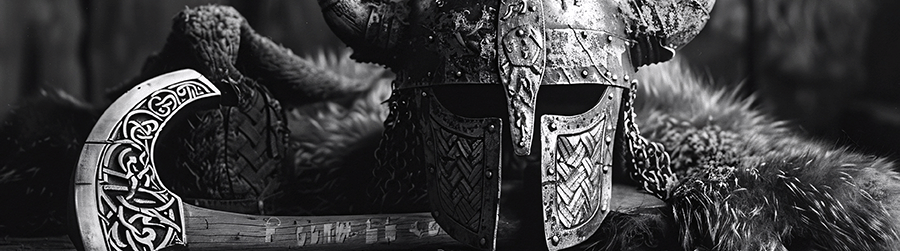
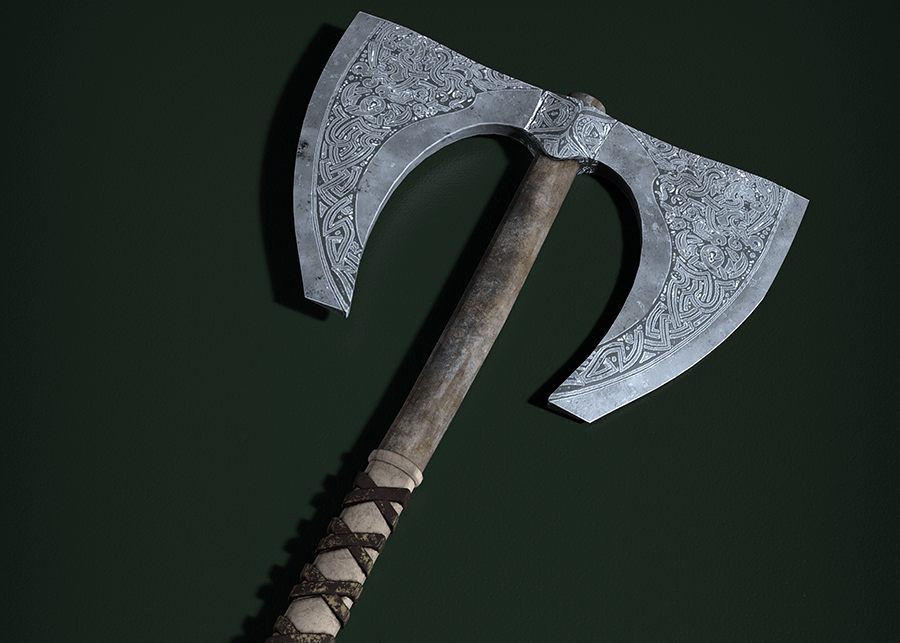
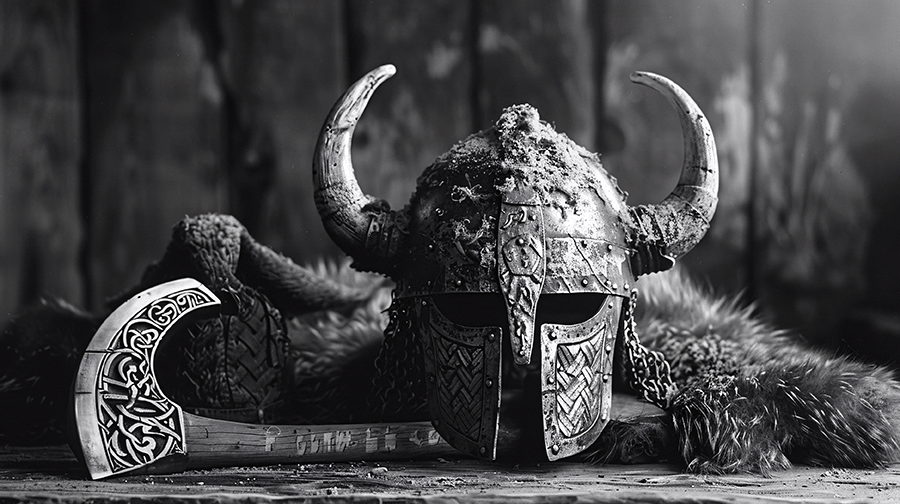
The Dane Axe – a two‑handed crescent, massive yet feather‑light, its head shaped like a half‑moon that could cleave through armor as easily as a winter wind splits a birch.
The Breiðøx – a broad, heavy axe meant for timber, its single‑bevel edge honed to a whisper‑thin slice for smoothing planks, its weight a reminder of the labor of the village.
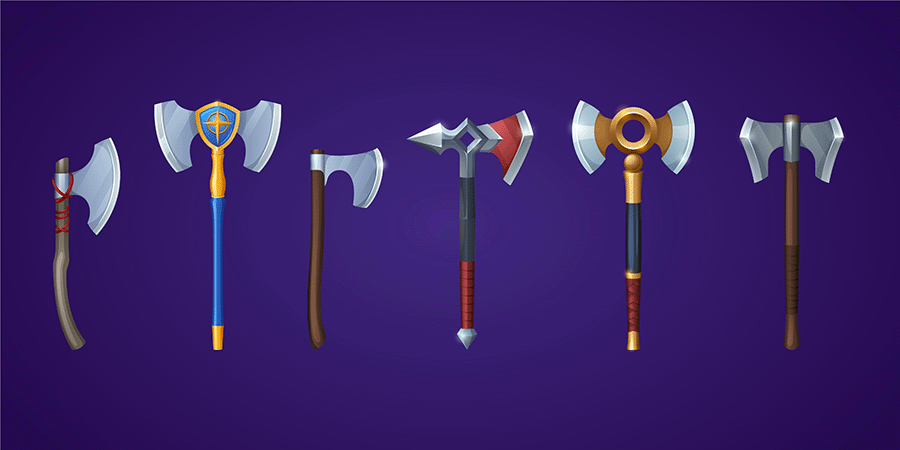
I ran my calloused fingers over each head, feeling the contrast. The bearded axe felt like a serpent coiled in my palm, the Dane Axe was a thundercloud ready to be unleashed, and the broad axe was a stone, solid and immovable.
The First Haft
Ash was my choice for the haft—light, resilient, forgiving to the shock of a strike. I split a log with my father’s old adze, the scent of fresh wood rising like prayer. When the grain fell away, I shaped the shaft, tapering it to a perfect balance point. The iron head, still hot, was pressed into the d‑shaped eye of the axe. I fitted a bronze cap over the eye, its surface etched with the rune ᚠ (Fehu), the rune of wealth, for I believed that a warrior’s wealth was measured not in gold but in the lives he could protect.
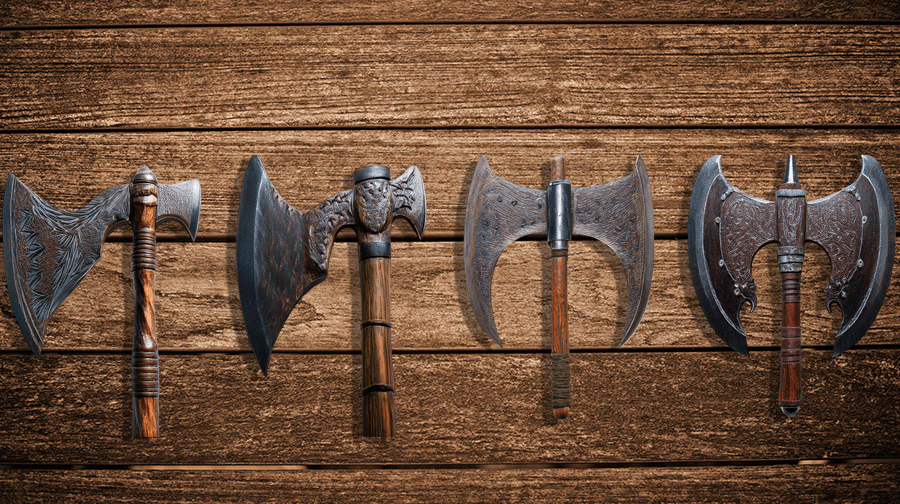
I drove a wedge of oak into the throat of the fitting, the sound of metal biting wood a chorus to my heartbeat. When the hammer fell, the head sang—thunk, thunk, thunk—and settled, as if the axe itself had accepted me as its keeper.
The First Strike
The first time I swung the skeggøx, the world narrowed to a line of iron and steel. My opponent was a rival chieftain’s man, a hulking berserker named Kolr, whose shield was as wide as a horse’s back. The battle was a frenzy of shouts, the smell of tar and sweat, and the metallic tang of blood.
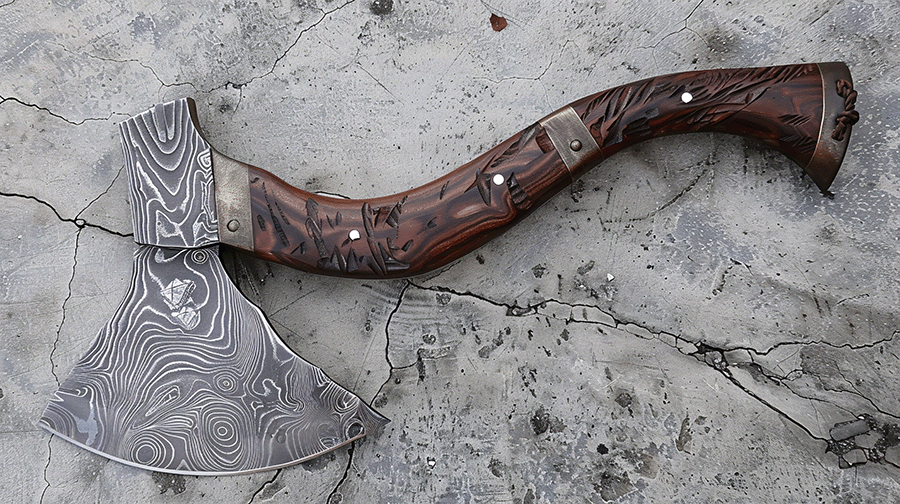
Kolr raised his shield, a wall of iron, and I felt the pull of the bearded blade’s hook. I slashed low, the extended lower blade catching the rim of his shield, jerking it aside with a crack that sounded like a branch breaking. My opponent’s arm, exposed for a heartbeat, swayed as the blade slipped beneath the metal and sank into the flesh beneath. Blood sprayed, a bright banner of crimson against the snow‑white ground.
The skeggøx gave me more than a strike; it gave me control. I could pull a shield away, hook a limb, and—most importantly—strike with a speed that left no time for retaliation. The edge, hardened steel welded onto a softer iron body, snapped like a hawk’s talon. It was thin, light, balanced for speed, not raw force, and that made it deadly in close quarters.
The Two‑Handed Thunder
When the village was besieged by a fleet from the east, the chieftain called upon the elite warriors, those who could wield the mighty Dane axe. I was chosen, not for my size—though I was taller than most—but for the steadiness of my arm and the patience of my mind.
The Dane axe’s shaft was nearly two meters of ash, the head a crescent of polished iron, its edge a whisper‑thin line that could sever a neck with a single sweep. The metal was light for its size, a masterpiece of the smith’s art. I lifted it, feeling the weight of the centuries in my grip, the handle humming with the stories of battles long past.
In the clash that followed, I stood at the front, the axe raised like a stormcloud. When the enemy’s shield wall broke, I swung the Dane axe in a wide, looping arc. The crescent sang as it cut through the air, cleaving armor and bone alike. The blade’s thinness allowed it to bite deep, and its length gave me reach beyond my comrades. One swing—whoosh—and a rival warlord fell, his helm shattered, his eyes wide with the shock of a death that came not from a blunt blow but from the clean, precise cut of a blade designed for speed and lethality.
The Dane axe was a weapon of elites, but in that moment it felt like an extension of my will, a thunderous promise that the enemy would not stand against us for long.
The Timber’s Whisper
When the summer sun warmed the fields, my days shifted from the clangor of battle to the rhythm of the woods. The broad axe—breiðøx—was my companion in the forest. Its heavy head, forged for hewing timber, sang a different song. Each swing was a measured breath: down, the arc of the axe biting into the trunk; up, the wood splitting, revealing the fragrant heart of the pine.
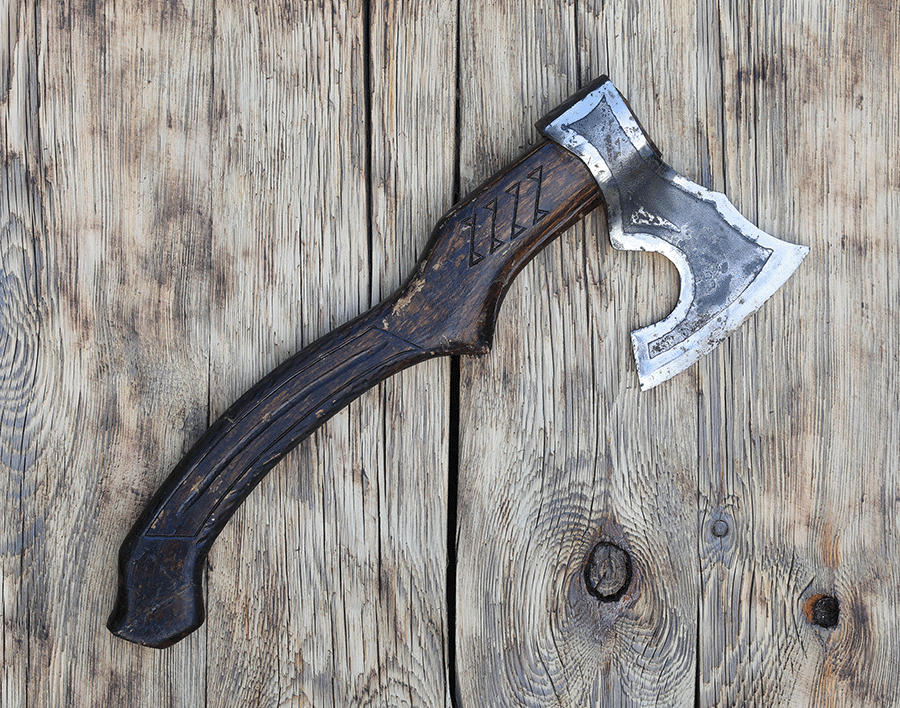
The broad axe’s single‑bevel edge was not meant to kill men but to shape the world. With it, I cut the beams for the longhouse, the pillars for the shipyard, the planks that would carry us across the sea. Its heft reminded me that strength was not only in the quick strike, but also in the patience of a laborer shaping his world.
When I hammered the final nail into the roof of the great hall, I felt a quiet pride. The breiðøx had been a tool of peace, a silent witness to the building of a community that would later rally under the battle‑cry of our axes.
The Runes and the Silver
Every axe I owned bore a story etched into its metal. The skeggøx’s haft was inlaid with silver runes—ᚢ (Uruz) for strength, ᚦ (Thurisaz) for protection, and ᚾ (Naudiz) for need. The silver caught the light as I moved, a flash that reminded my foes that I was not just a man, but a bearer of the old gods’ favor.
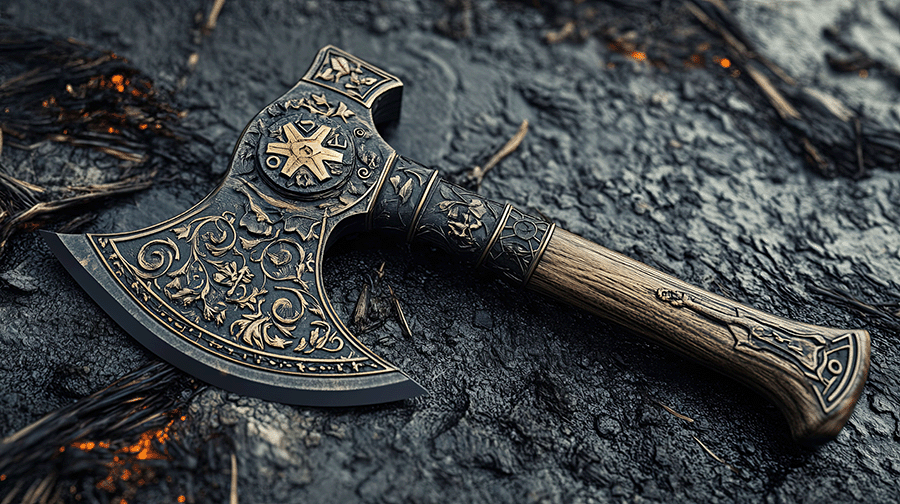
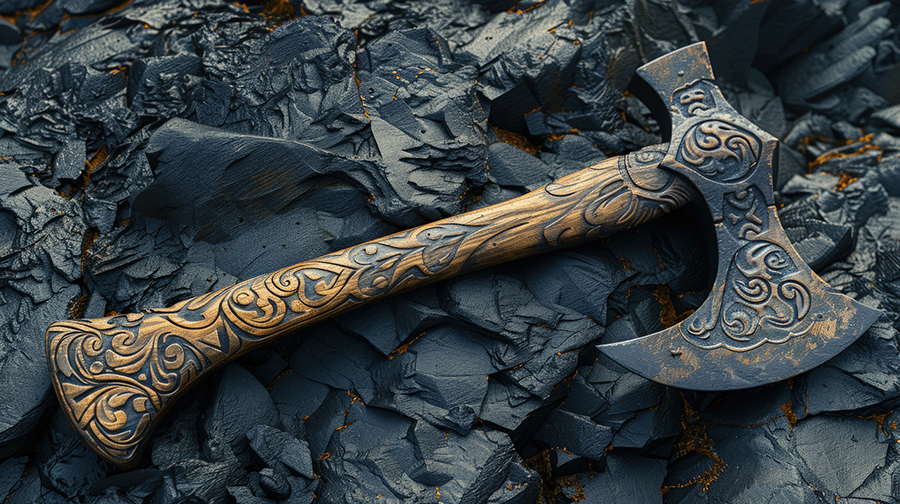
My Dane axe carried the Mammen pattern—a swirling serpent of interlaced vines and beasts, its edges framed in thin lines of silver, each curve a prayer for victory. The broad axe, though more functional, still wore a simple ᛁ (Isa) rune on its blade, a reminder that even the hardest wood can be split with patience and focus.
I believed that the embellishments were more than vanity. They were talismans, the iron and silver binding my fate to the will of the Norns. When I felt the world tremble under the weight of war, I would run my thumb over the runes, feeling the subtle vibration as if the very cosmos answered my touch.
The Day the Axes Sang
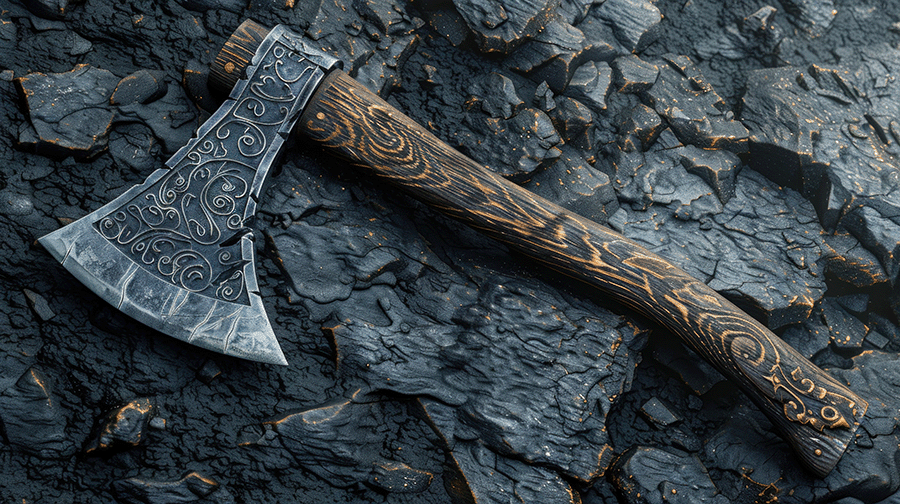
The night before the raid on the fjord of Vík, I sat alone by the fire, the three axes laid before me. The skeggøx rested against the hearth, its beard glinting like a promise. The Dane axe leaned against the wall, its crescent head catching the flames in a dance of shadows. The broad axe leaned against the far post, its heavy head a silent sentinel.
I thought of my father’s words: “A blade is nothing without its spine. A warrior is nothing without his tools.” I lifted each axe, feeling the weight of my blood, my tribe, my ancestors.
When dawn broke, the sky painted in bruised purples and gold, I took the skeggøx in my right hand, the Dane axe in my left. The broad axe stayed in the longhouse, a reminder that the world we fought for was built on wood and bone, on the labor of many hands.
The battle roared like a storm. Shields clanged, cries rose, and the sea hissed against the cliffs. I moved through the chaos, my axes singing in unison. The bearded axe hooked a shield, the Dane axe cleaved a warhammer, and I felt the pulse of each strike echo in my chest. In the heat of the fray, I saw the moment a young warrior faltered, his axe slipping from his grip. I seized his fallen blade, a simple karve—a felling axe—gripping it with both hands. It was an everyday tool, yet in the fury of battle it became a weapon as lethal as any forged for war.
That night, when the tide receded and the bodies lay scattered like broken spears, I stood on the shore, the three axes gleaming in the moonlight. I whispered a prayer to Thor, to Odin, to the spirits that dwelled in wood and iron.
May my axes always be swift, my strikes true, and my hands steady. May the beard of my axe never falter, the moon of my Dane never wane, and the broad blade of my labor never rust.
I sheathed the skeggøx first, its hook catching the wind like a promise kept. I laid the Dane axe down with reverence, its crescent silhouette a waning moon in the night sky. Finally, I lifted the broad axe, turned it toward the longhouse, and set it back upon the workbench. The wood was still waiting for my hands, for the quiet shaping of peace after the storm of war.
In that moment, I understood what my father meant. The axe was not merely a tool of battle; it was the thread that wove my life—battle, craft, belief—together. It was the edge of my hand, the extension of my soul, the voice that sang in the heat of conflict and the hush of the forest.
And so I, Erik of Hrafnnes, will carry these axes until the rivers run dry and the stars fall from the sky, for they are the measure of a warrior, a craftsman, and a son of the North.