Alikant: An American Dragon
My name is Erik. I am the son of a king and a queen, but my first memories are not of silk banners or a gilded cradle. They are of the smell of damp earth, the calloused hand of a woman named Gunnhildr guiding my small fingers to plant a seed, and the rough, kind eyes of a man named Leifr showing me how to hold an axe without trembling.
The story of how I came to be in that longhouse, the youngest of three children when my blood was royal, is a story of whispers and winter. It is a story my foster parents, Leifr and Gunnhildr never told me outright.
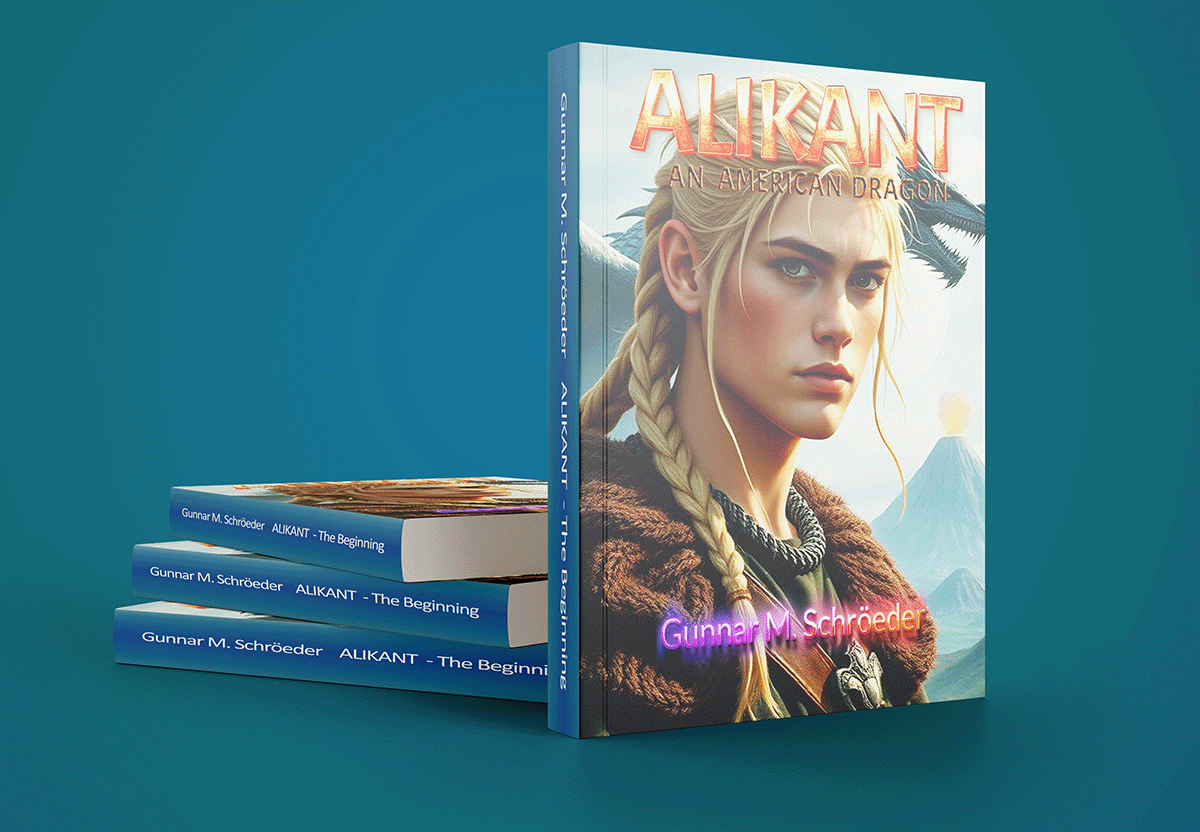
The truth came to me piecemeal, like tide-polished stones. From Runna, my fierce, protective foster-sister, who heard the grooms whisper. From old Skald, who remembered the hunting party that vanished in the blizzard years past. The tale centered on a place called the Whispering Woods and a woman of power named Elsinka.
My father, lost and freezing, had stumbled upon her hut. She knew his name before he spoke it. She knew of the empty royal cradle. But she saw a future, too—a future of six children, a full and noisy house. My father’s joy must have been a storm in that quiet room. Then came the thunderclause: the first fruit, the firstborn, would never sit on the throne of Hrafnnes.
|
|
|
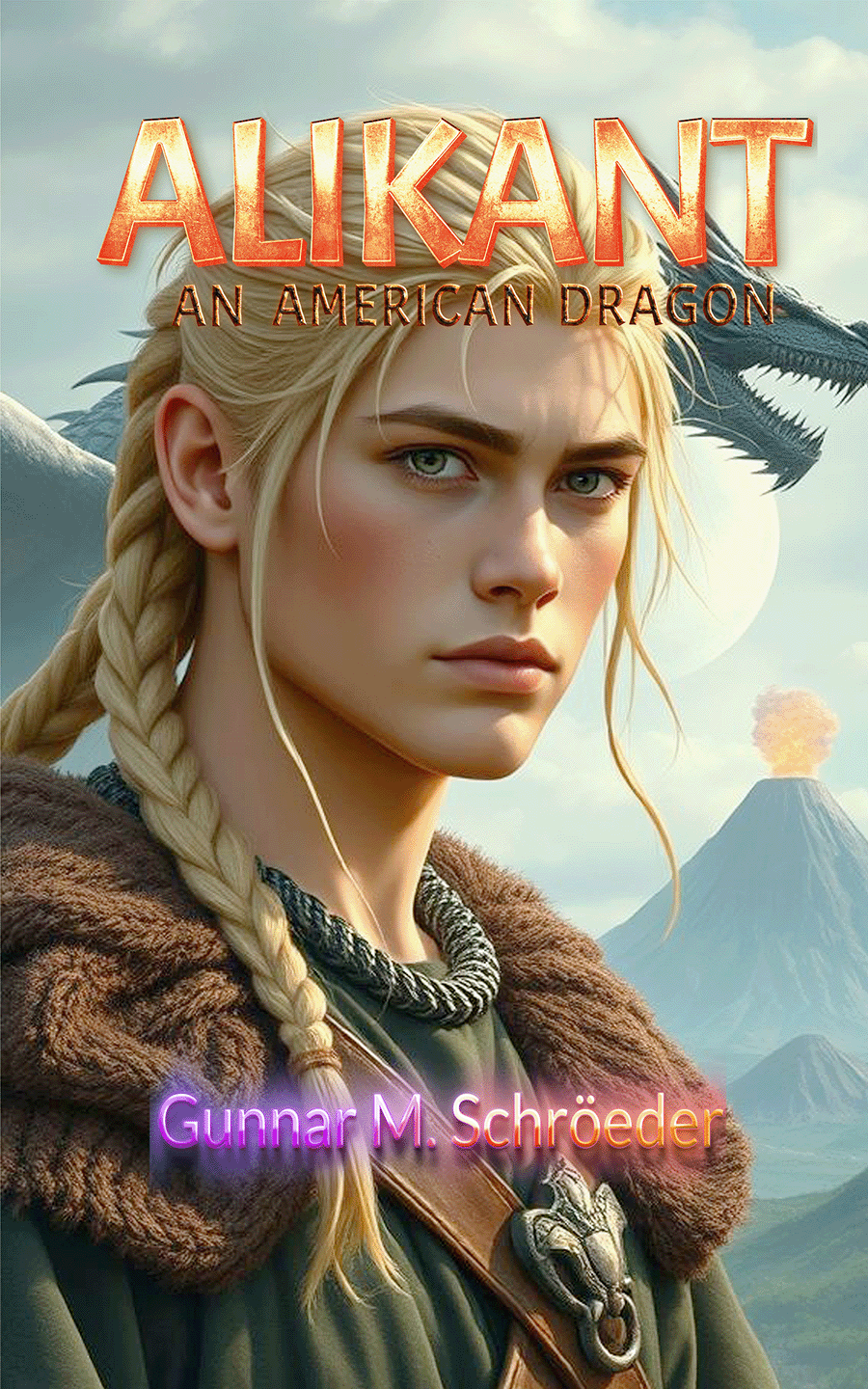
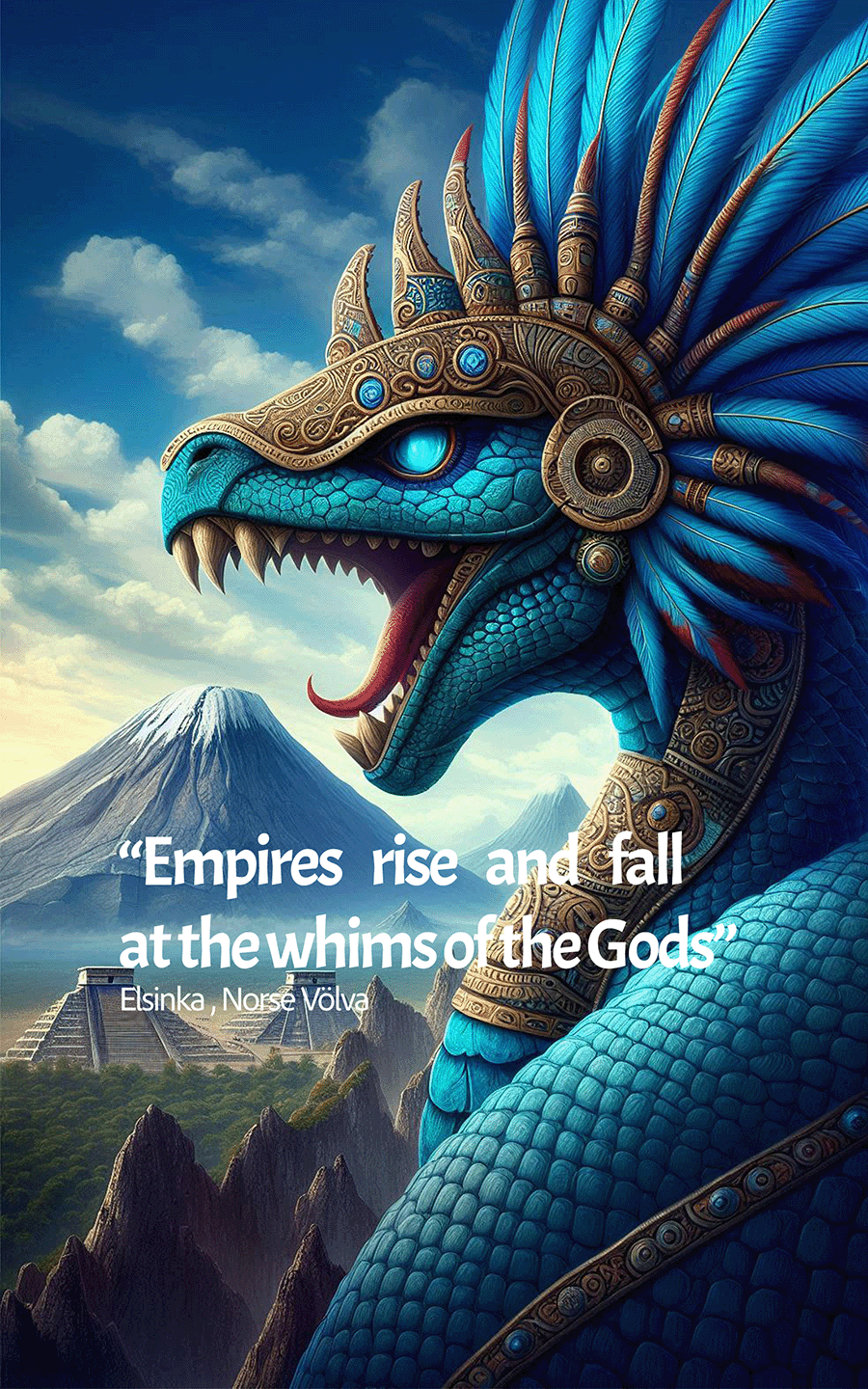
Tradition shrieked in protest. A king’s firstborn is his heir, his legacy. But Elsinka spoke of older laws, the whims of gods who build empires and unmake them on a breath. To defy the prophecy, she warned, was to bring a drought on the kingdom’s fields, a sickness on its herds. Love for his people, more than love for a traditional succession, made my father bow his head and accept the bitter with the sweet.
And so, nine months later, I arrived. At the sacred washing (Ausa Vatni), I was given the name Erik. And then, in the same quiet ceremony, I was given away. Not to another noble house, but to Leifr and Gunnhildr, sturdy farmers from the fjord. My parents’ parting gift to me was not a jewel, but a silent vow: I would learn everything. I would become a tool, honed for a purpose only the gods—and perhaps the Volva—could fully understand.
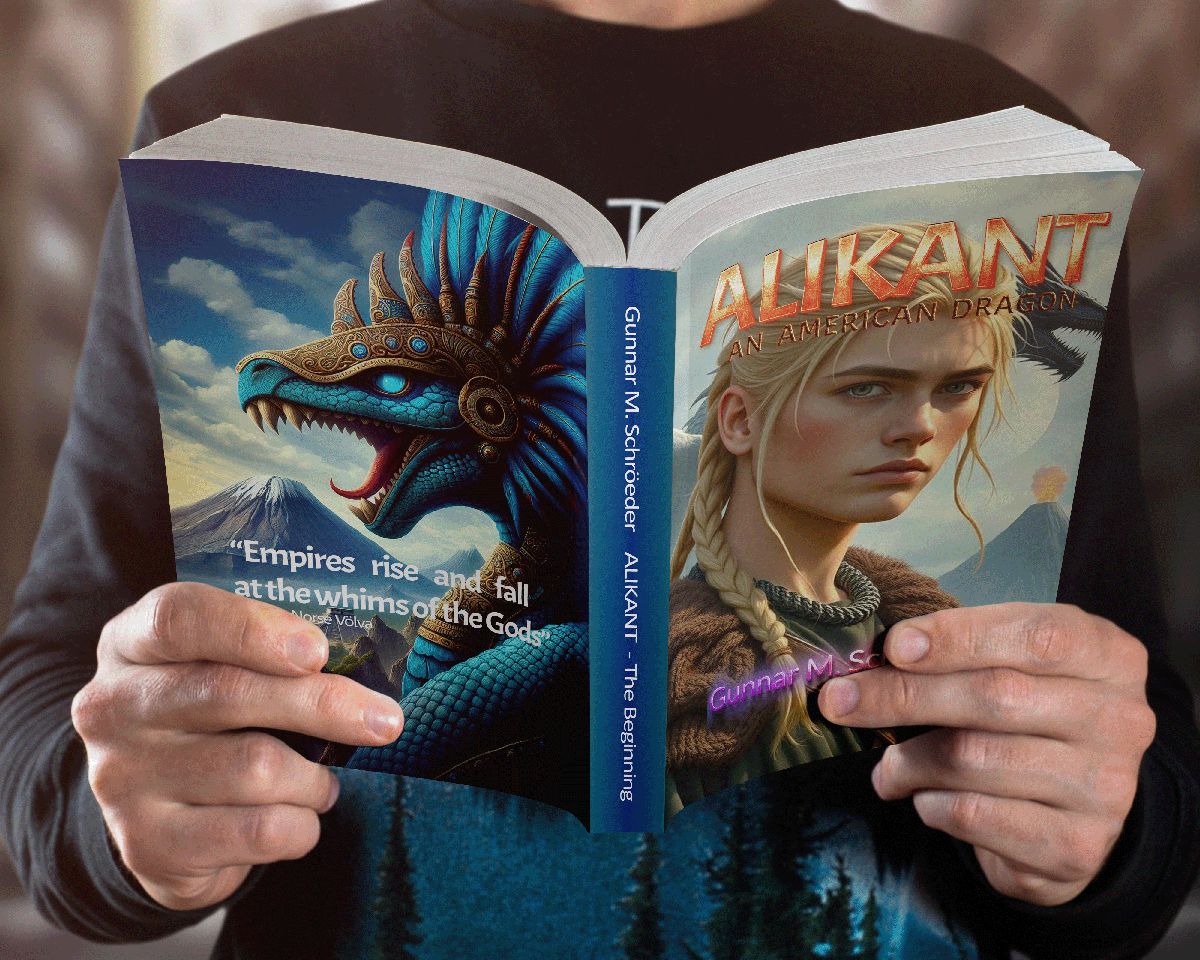
My childhood was a curriculum written in mud, snow, pine resin, and salt spray. Leifr taught me that true strength is patient. It is the strength to break the soil at dawn, to mend a stone wall that will outlive you, to shoulder the slow, heavy burdens of the seasons. Gunnhildr taught me the strength of nurture: which herbs healed a fever, how to soothe a crying child, how to make a meager meal taste like a feast.
When I was old enough, I was sent to the woods. My master was a Tracker named Sigurd, a man who spoke more to the forest than to people. He taught me to read stories in broken twigs and displaced stones, to move without a sound that would scare a squirrel, to find water in a desert of roots. “The woods do not care for your titles, boy,” he’d grunt. “They only care if you respect their silence.” I learned that survival was an act of listening.
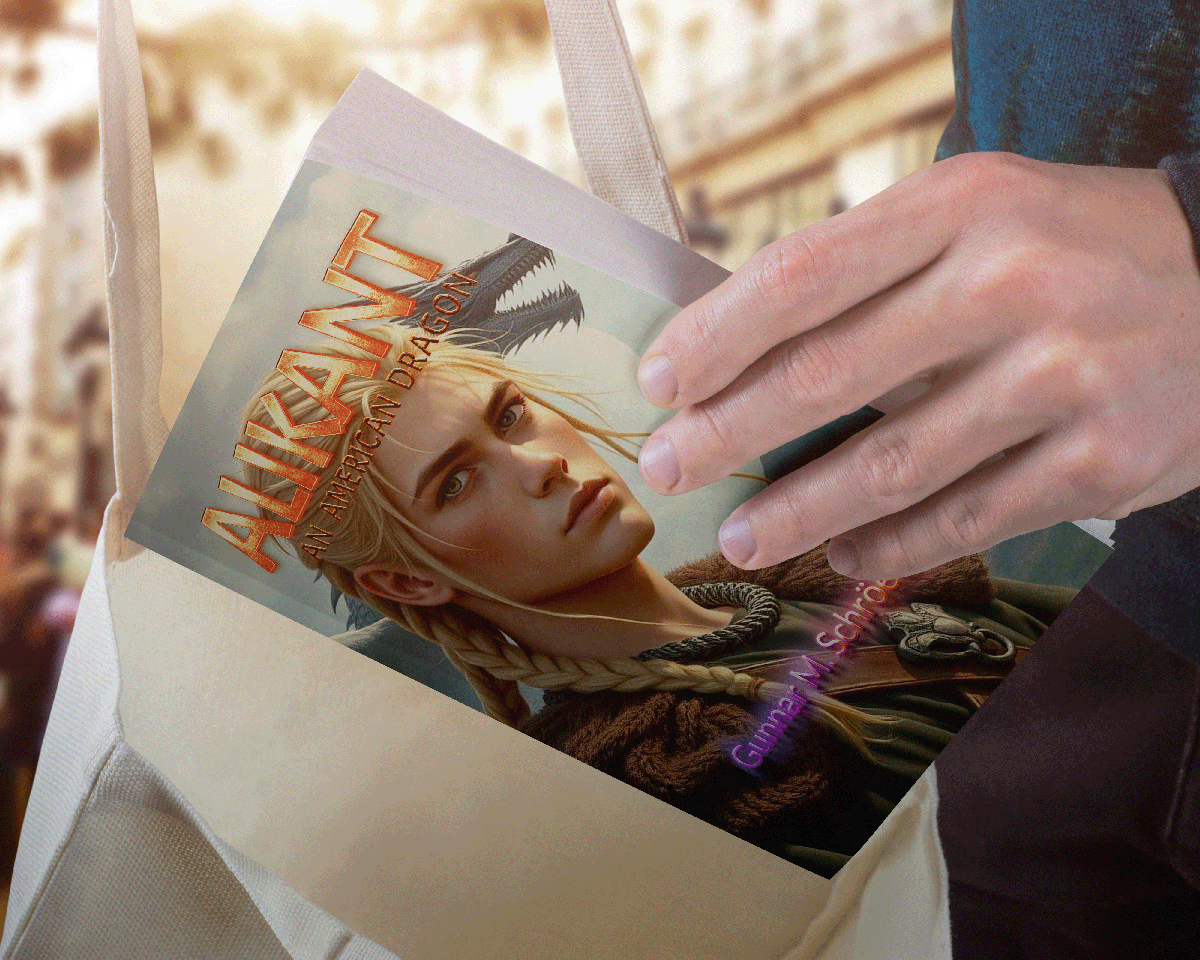
Then came the sea. Captain Kjetil was a hard man who believed the sea was a god with a temper. I learned to tie knots that would hold in a gale, to read the color of the sky, to navigate by stars that were strangers to the palace astronomers. I was sick for a month, clinging to the rail, but Kjetil never let me quit until I’d earned my keep. “Out here,” he yelled over the wind, “you are not a king’s son. You are a pair of hands. Be useful, or be food for fish.” I learned humility on the Deck of the Fjordstride, humbled by waves that made mountains seem like pebbles.
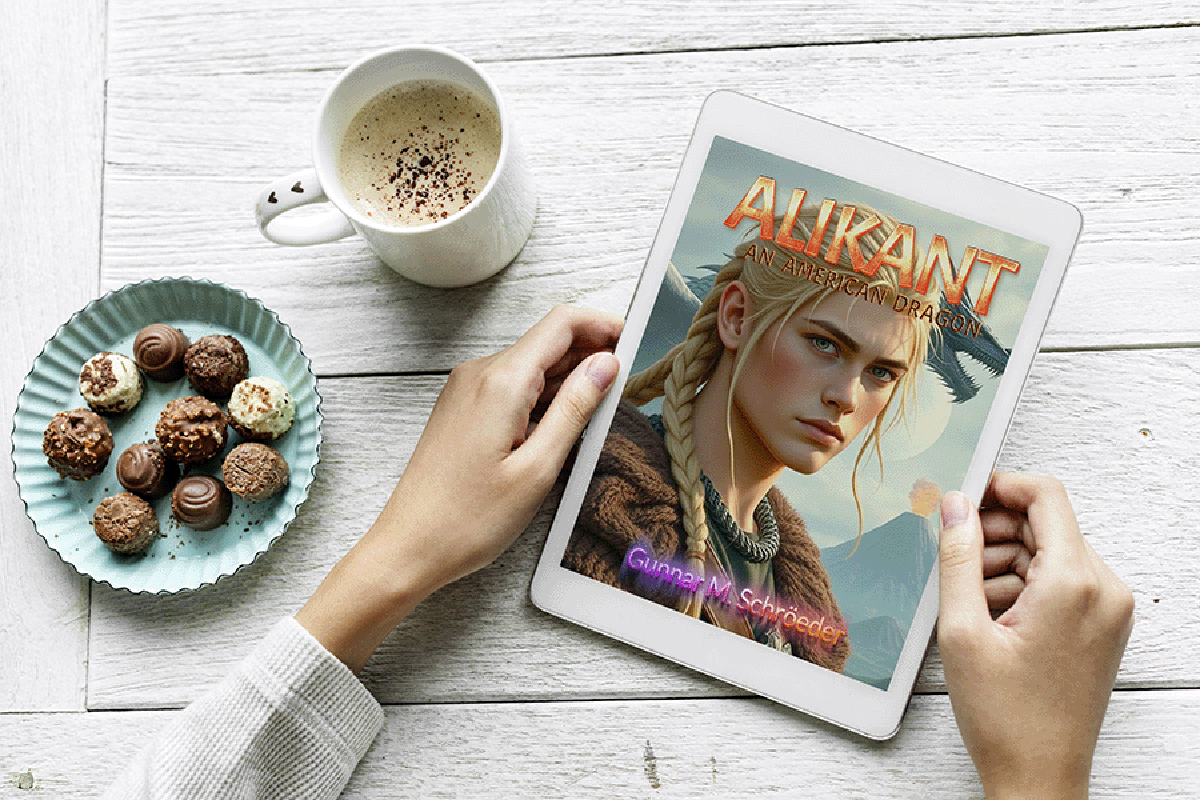
Finally, the last piece: the warrior’s path. I was fostered to Magnus, my father’s second in command. He saw my farm-calloused hands and woodsman’s eyes and saw not a prince, but raw material. The training was brutal. Shield-wall drills until my arm screamed, sword work until my blisters were calluses, wrestling until I could barely stand. But Magnus taught me more than violence. He taught me discipline, the trust of a comrade at your back, the strategy of a mind as sharp as a blade. “A warrior’s courage isn’t in his swing,” he said, parrying my clumsy thrust. “It’s in his heart. It’s defending someone who can’t defend themselves. It’s standing when every instinct screams to run.”
Through it all, the prophecy was a ghost I carried. The first fruit will never seat on the throne.
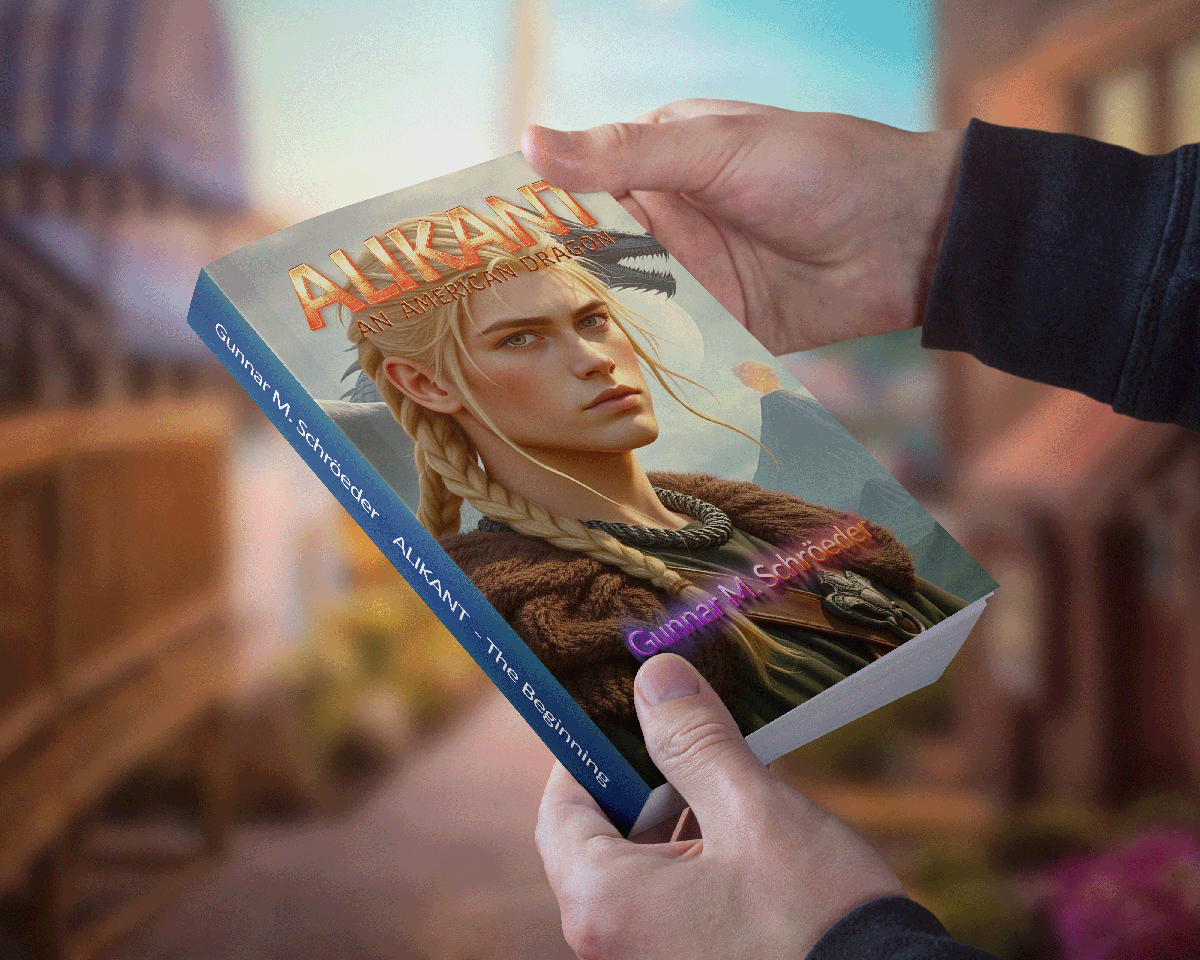
The clash of wooden swords was still ringing in my ears when the door of the longhouse groaned open. All motion in the training yard ceased. We all knew her—Elsinka, the Volva, her eyes the colour of a winter sky and her silence deeper than the forest at midnight. She didn’t speak to Magnus, my teacher, whose stern face remained impassive. She simply looked at me, Erik, son of the king, and with a slight, unarguable tilt of her head, she beckoned.
Magnus gave a single, slow nod. “Go,” he said, his voice like grinding stones.
She led me not to the stone halls of the royal kongsgård I’d only seen from a distance, but to a smaller, warmer chamber. There, by the low fire, sat a woman I knew must be my mother, her face a map of joy and sorrow. And with her… five children.
My father’s children. My siblings.
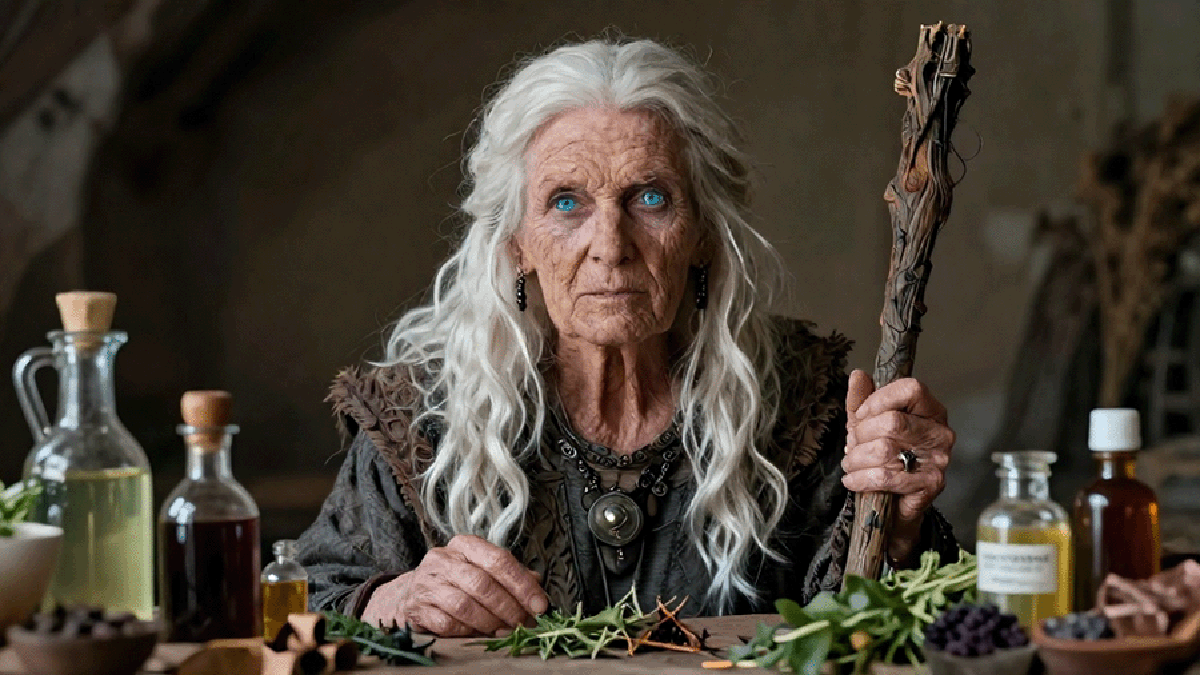
“My son,” my mother whispered, but the words were for the woman beside her. Elsinka’s prophecy was a stone dropped into the still pond of my life, and these were the ripples.
Fróði, sixteen, stood like a young oak. He was the second son, now heir, his gaze already carrying the weight of a crown. He offered a careful, measured bow, eyes assessing the warrior-brother he’d never needed. Then the twins, Haraldr and Sveinn, thirteen and inseparable, a blur of matching braids and identical, mischievous grins that faltered slightly at my solemn face. Freya, ten, was a small, grave girl with my mother’s eyes, who clutched a rough-carved wooden horse. And then there was Ulf, five, who simply stared, his thumb in his mouth, a little bear of a boy who didn’t understand why his world had just grown so large and strange.
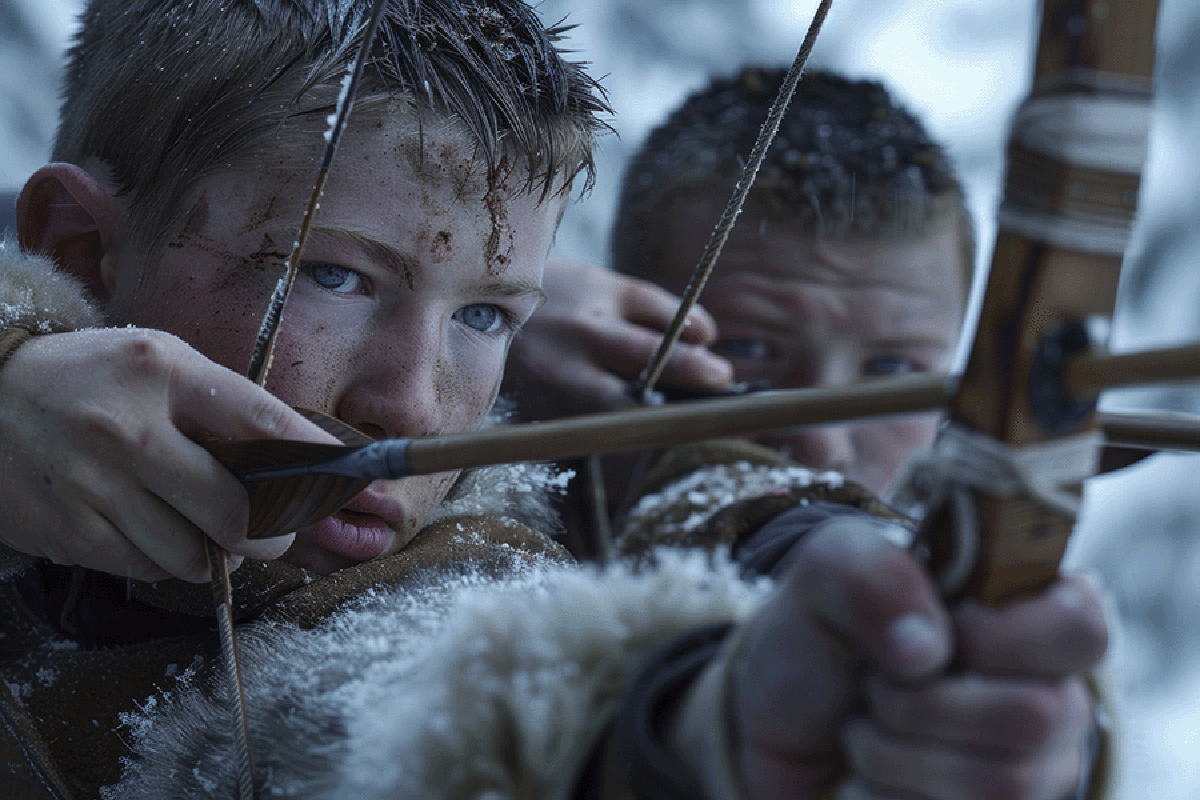
That night, the great hall of the kongsgård was packed. Every Jarl, every important man in the kingdom, sat on benches that creaked with anticipation. The air hummed with the scent of pine smoke, roasted boar, and unease. I stood beside my newly-found family, a line of bewildered children and one stunned man beside the second-born heir.
Elsinka did not sit. She stood before the high seat, empty since my father’s passing, and the hall fell into a silence so profound you could hear the fire’s heartbeat.
“The threads have been pulled,” she intoned, her voice not loud, but filling every corner. “Prince Erik’s future has been revealed. Tonight, the entire kingdom will learn his fate.”
She looked at Fróði, then at me. “The crown sits heavy on one head already. The gods have spoken a different path for the firstborn.