Gunnar
-
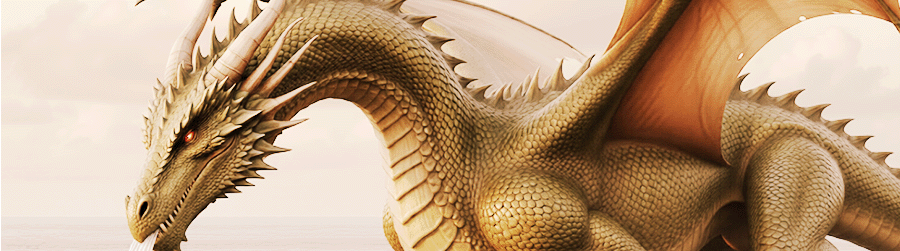
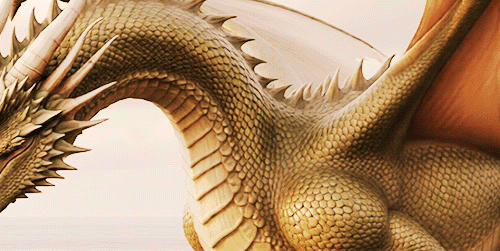
Alikant: The Dragon From Cabo San Lucas
I have always liked to think that the world is a series of coincidences waiting for a story to bind them together. When I booked a flight to Cabo San Lucas for a week‑long “sun‑and‑sand” retreat, I was looking for nothing more than a break from spreadsheets, conference calls, and the endless buzz of a city that never seemed to pause. I wanted warm water, a good margarita, and maybe a sunrise over that famous rock formation that photographers call El Arco. I never imagined that the tides of my blood would rise up and pull me toward a legend that had been sleeping in plain sight for centuries. The moment the plane’s…
-
Viking Ships Were Not “Inferior” but Simply Different
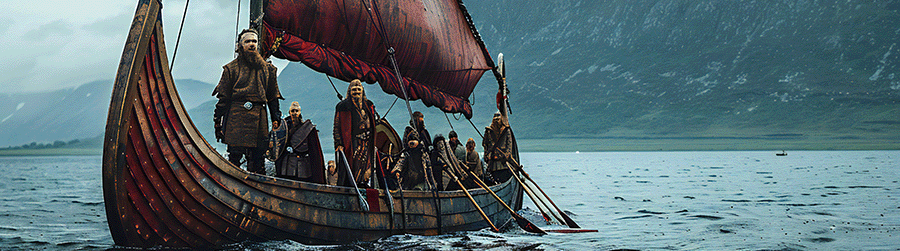
When you picture a Viking longship slicing through the North Sea, the image that most people keep in mind is a sleek, low‑lying hull whose wooden planks overlap like the scales of a dragon. That overlapping technique is called clinker (or “lap‑strake”) construction. By contrast, the famous English warships Mary Rose and Victory were built using caravel construction, in which a solid internal frame is erected first and the planks are then fastened to it, leaving a smooth outer skin. At first glance the dominance of caravel in later medieval shipbuilding might suggest that clinker was a primitive, “poorer” method. The reality is more nuanced. Clinker and caravel each have…
-
Alikant: An American Dragon
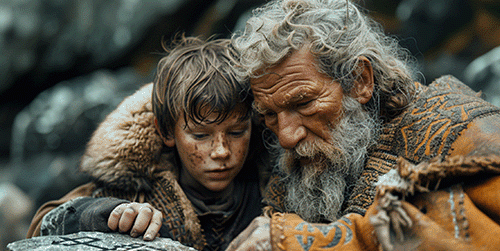
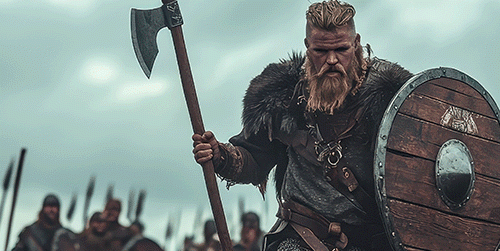
My name is Erik. I am the son of a king and a queen, but my first memories are not of silk banners or a gilded cradle. They are of the smell of damp earth, the calloused hand of a woman named Gunnhildr guiding my small fingers to plant a seed, and the rough, kind eyes of a man named Leifr showing me how to hold an axe without trembling. The story of how I came to be in that longhouse, the youngest of three children when my blood was royal, is a story of whispers and winter. It is a story my foster parents, Leifr and Gunnhildr never told…