The Vargdrekinn
The Vargdrekinn: The Sacred Longboat that Carried Prince Erik to Vinland
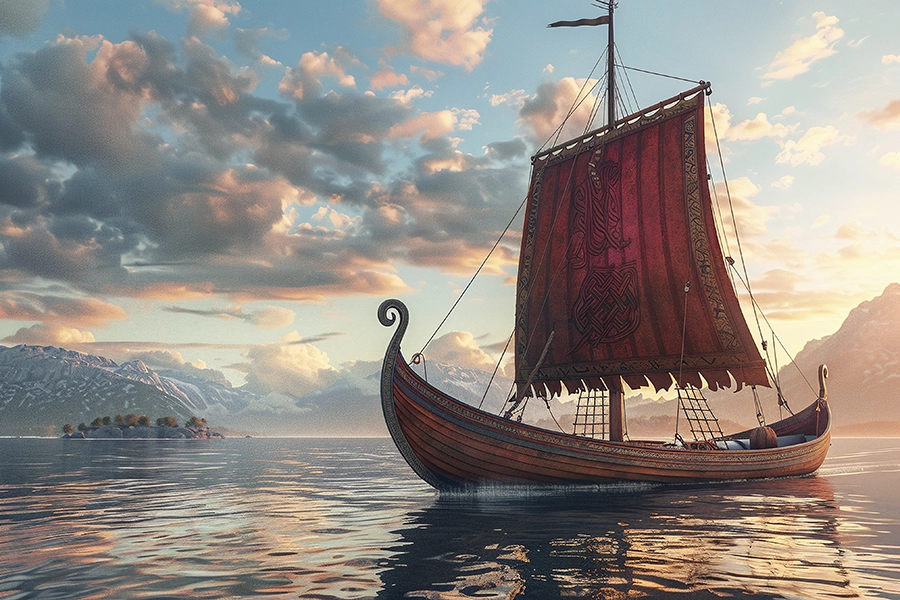
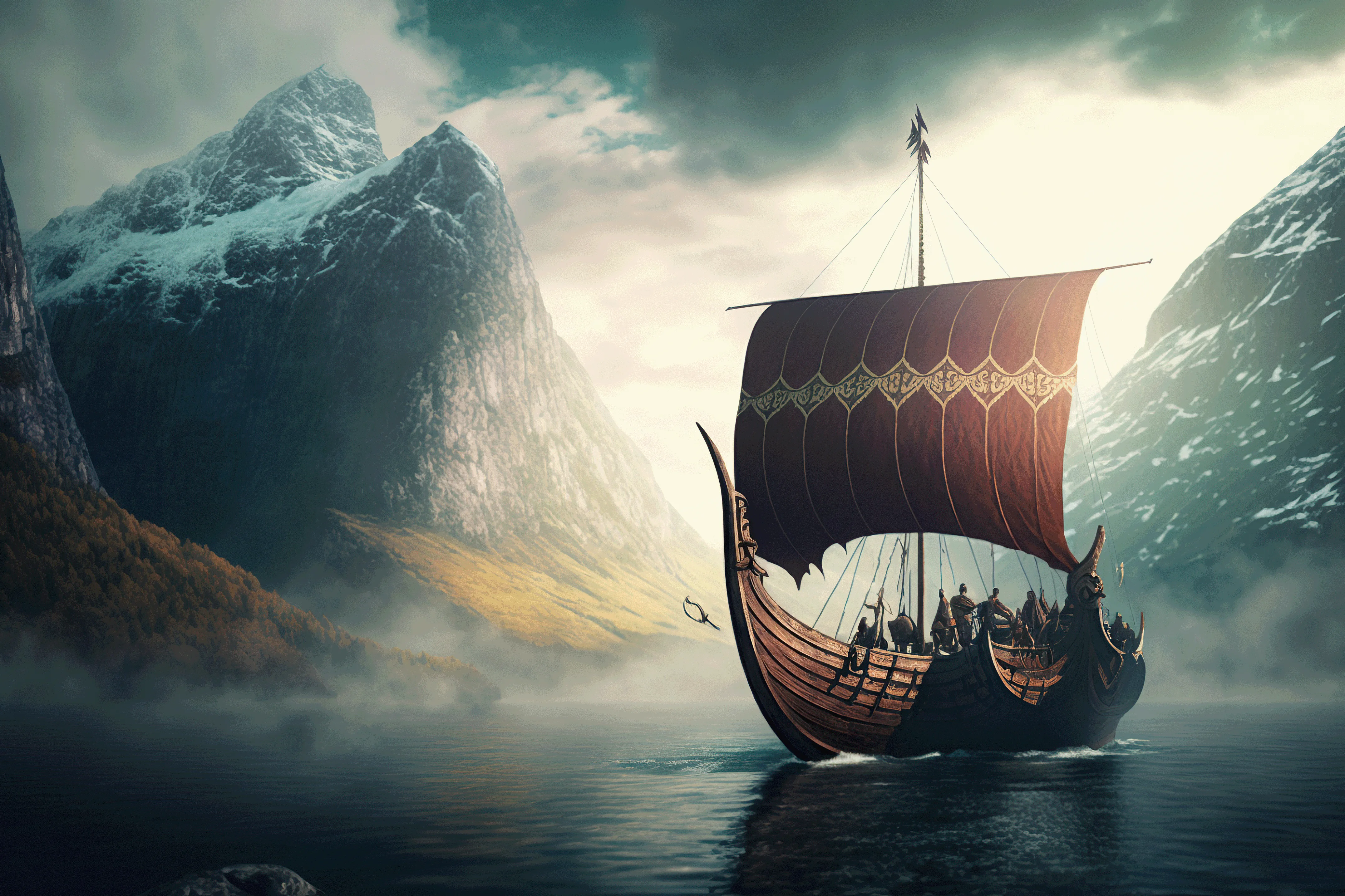
When the chronicles of the North are dusted off, the name that most often surfaces is that of Prince Erik, the daring son of King Akbar. While his father ruled from a grand, respectable flotilla, it was Erik’s own vessel that earned legend. The longboat that bore him across the storm‑tossed North Sea to the distant shores of Vinland was not a mere craft; it was a gift from the gods, a living embodiment of Norse myth, and a fortress on water. Known to the sagas as the Vargdrekinn, the ship’s story is a tapestry of bravery, mysticism, and the relentless pursuit of a destiny that was written in both rune and blood.
A Vessel Chosen by the Gods
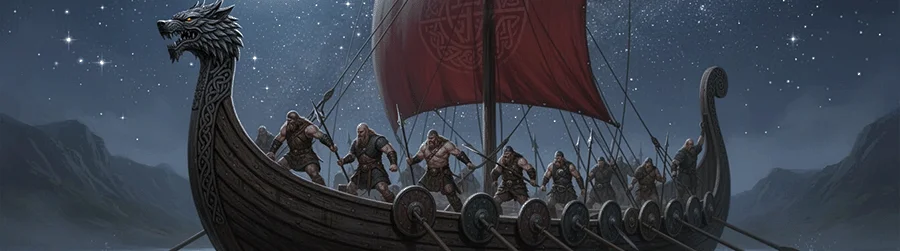
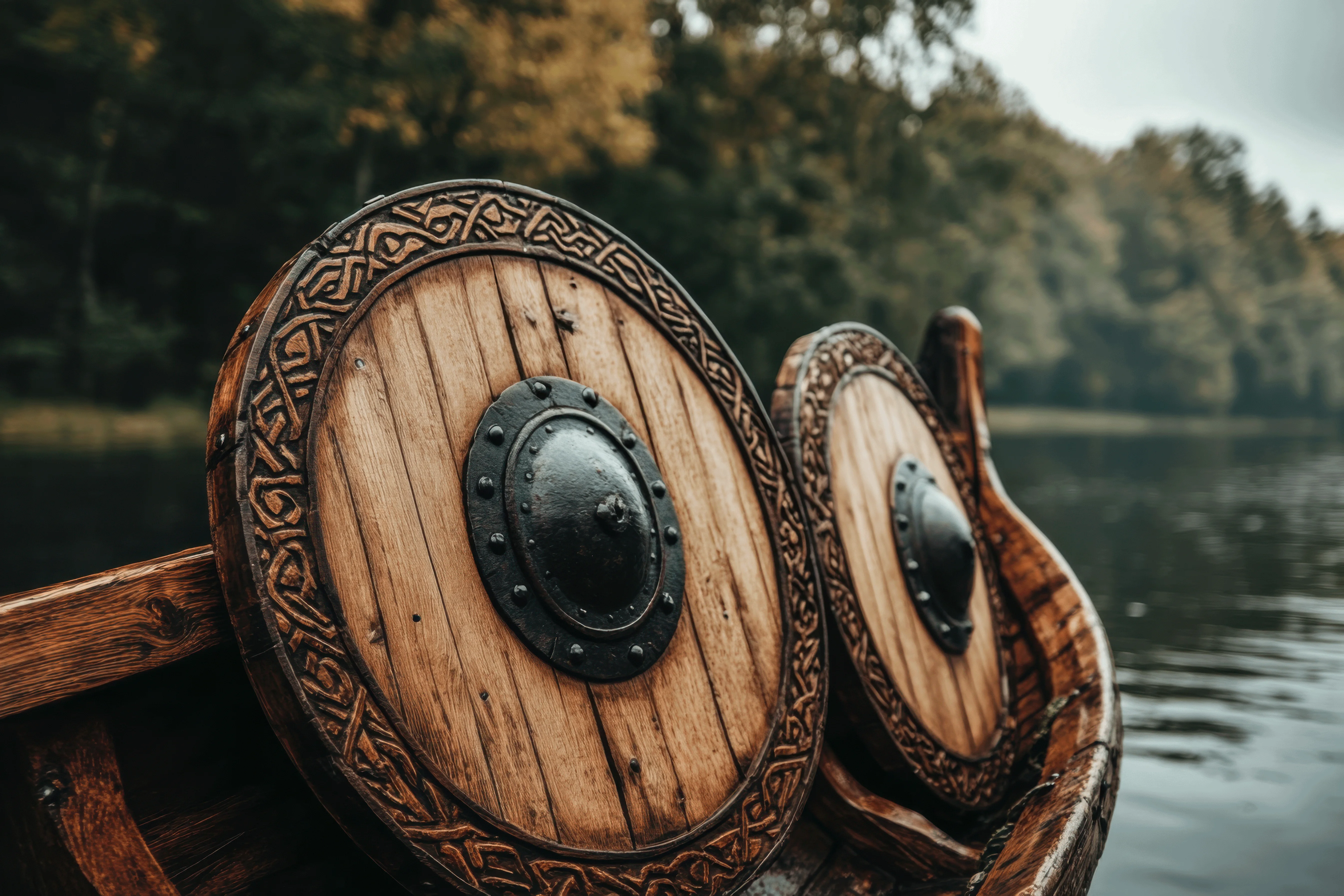
The Vargdrekinn was deliberately modest in size. Its hull measured just enough to accommodate twelve oarsmen—six on each side—yet every rower was more than a sailor; each was a seasoned warrior who had sworn an oath to protect Erik with blade as well as blade‑stroke. This dual purpose gave the longboat a defensive edge that larger, more sluggish vessels could never hope to match. If a sudden squall turned the sea into a battlefield, the oarsmen could seamlessly shift from rowing to wielding swords and shields, forming a wall of iron and resolve on the deck..
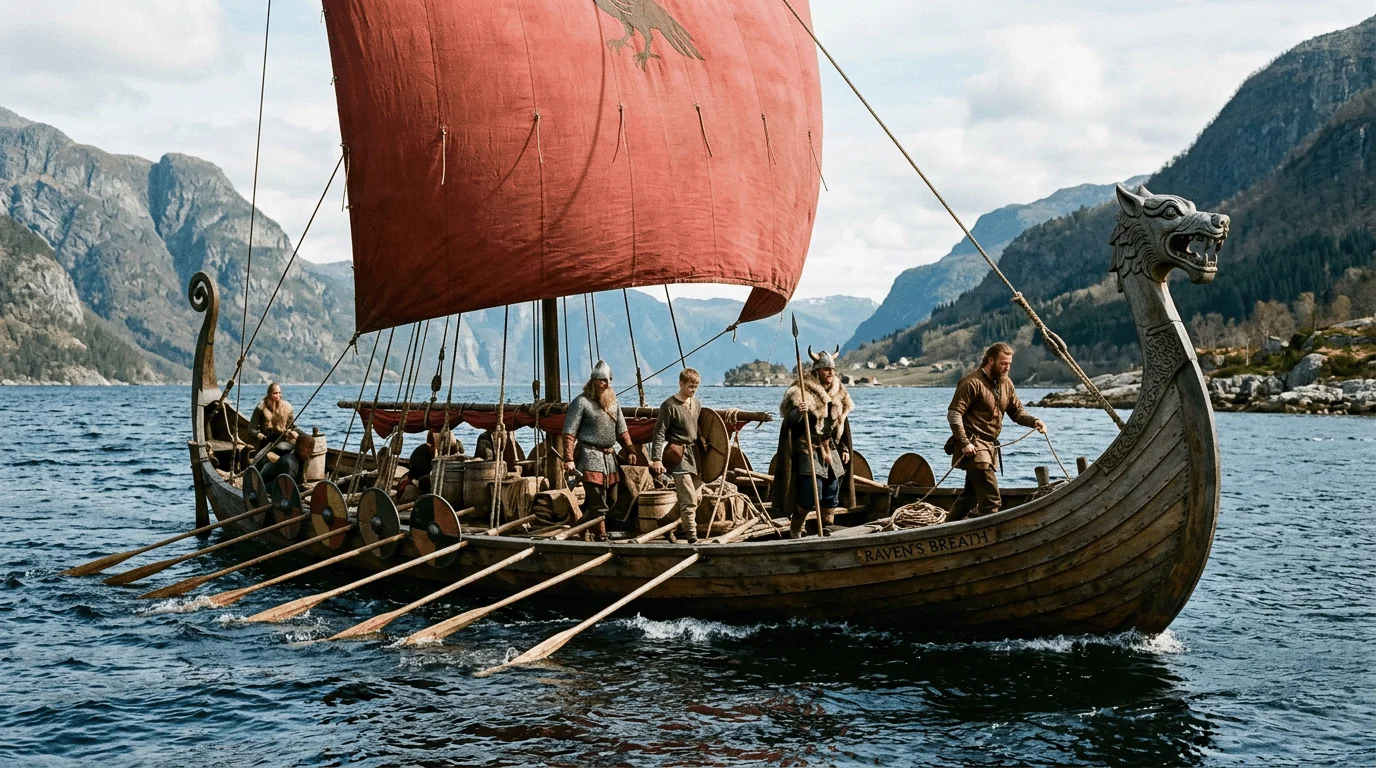
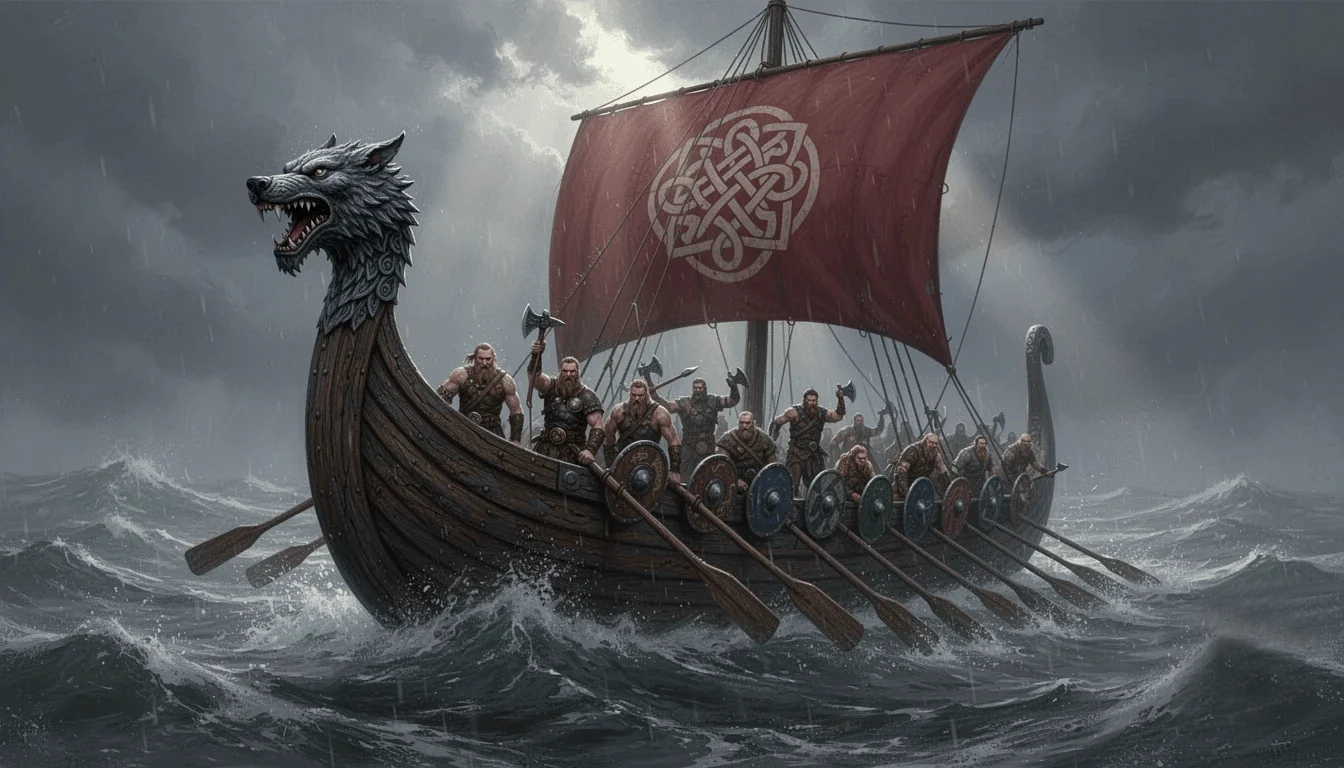
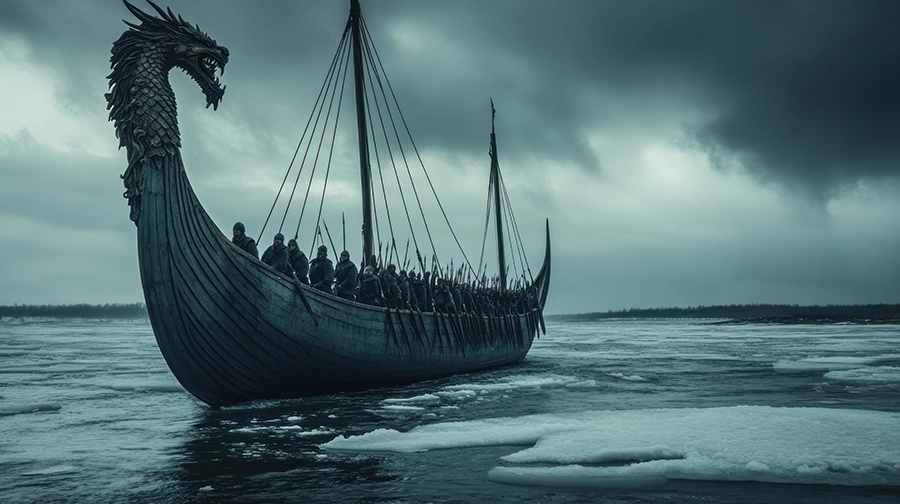
The design of the Vargdrekinn was steeped in symbolism. Its prow bore a fierce wolf‑dragon head, eyes set upon the horizon as if ever‑watchful for danger. The creature’s snarling maw was more than decorative; it was a talisman meant to frighten hostile spirits and to remind the crew that they traveled under divine favor. Above the prow, a single, sturdy sail unfurled like the banner of a war‑band, catching the wind with the same ferocity that the dragon’s spirit seemed to summon..
Perhaps the most mysterious feature of the boat was the hidden compartment sewn into its belly. Within this secret hold lay four dragon eggs, each said to pulse with an inner fire that could awaken the very essence of the world. The eggs were not mere cargo; they were the reason for the journey, the promise of a new era for the North, and the cause of every peril that stalked the ship’s wake.
The Hand that Steered the Destiny
Erik did not command the Vargdrekinn alone. He was flanked by a cadre of trusted men whose names have survived the erosion of time. At the helm stood Captain Kjetil, King Akbar’s most reliable seaman, a man whose knowledge of the North Sea’s fickle moods was rivaled only by his steadiness in crisis. Beside him, Magnus, the king’s second‑in‑command, oversaw security. Magnus’s reputation as a tactician and his keen eye for treachery kept the crew alert to threats that could arise from both sea and shore..
Two more warriors, Torben and Ingolf, had volunteered to join the venture. Both were veterans of countless raids and skirmishes, and their presence served a dual purpose: they reinforced the rowing ranks and added depth to the defensive line should the need arise. Their willingness to bind their fates to the prince’s cause underscored a culture in which loyalty to the crown often meant offering one’s life on the very planks of a ship.
The Voyage: From Norway to the New World
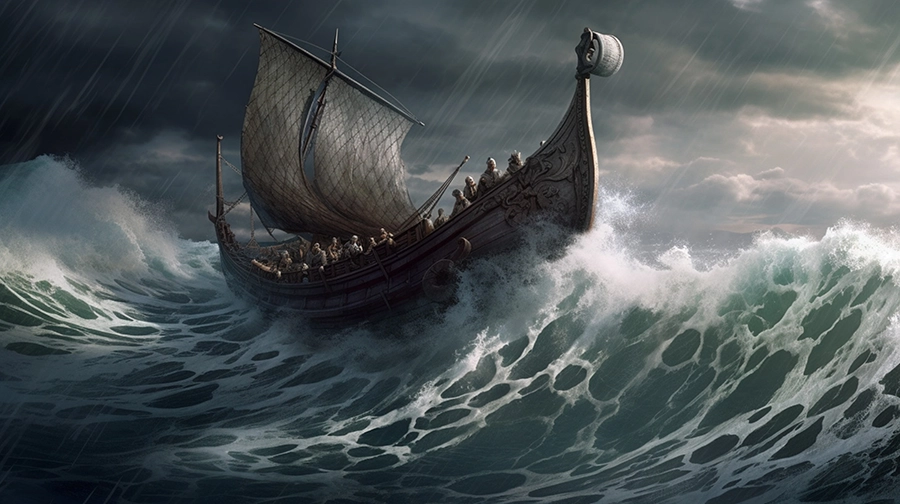
The intended duration for the crossing from Norway to Vinland, according to the navigation charts of the era, hovered around two weeks. Under favourable winds and calm seas, a skilled crew could make good time, pulling the Vargdrekinn across the open ocean with a rhythm as steady as a heartbeat. However, the reality proved far more brutal. Weather in the North is capricious, shifting from calm to squall in the blink of an eye, and the longboat’s modest size meant it could not weather prolonged storms without frequent repairs..
More devastating than the elements were the relentless assaults that stalked the Vargdrekinn after it left Norwegian waters. Pirates, ever eager to plunder a vessel bearing precious cargo, attempted to board the longboat on multiple occasions. Their attacks were met with a coordinated defense; the rowers, already trained in combat, rose from their benches with swords flashing, turning each skirmish into a display of disciplined ferocity..
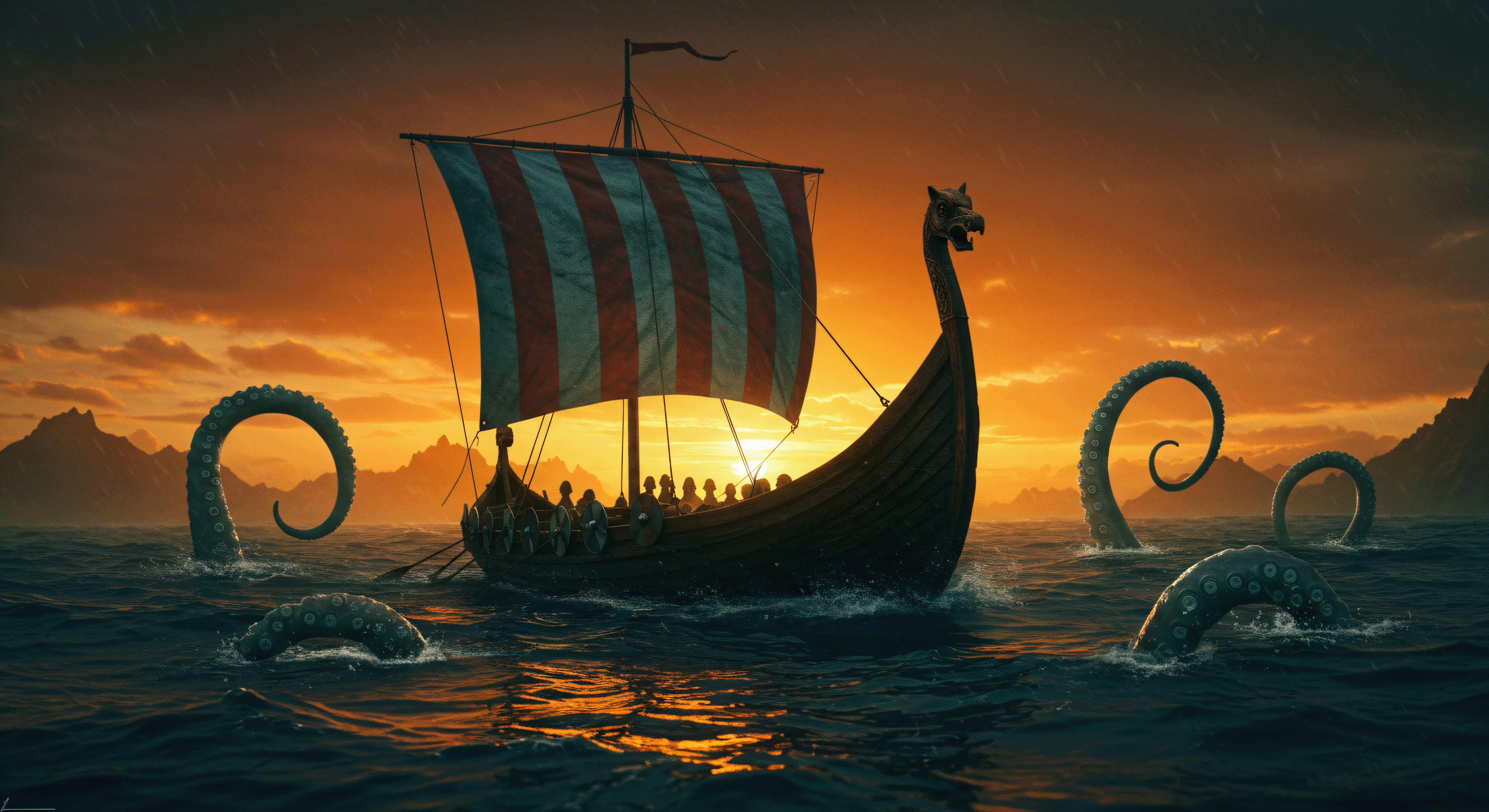
But the sea also teemed with forces less mortal. Witches, drawn by the arcane aura surrounding the dragon eggs, tried to curse the vessel, casting dark clouds that threatened to drown the crew in fog and spite. Necromancers, sensing the potent life force within the eggs, dispatched revenant crews of the dead, hoping to seize the eggs and harness their power for forbidden rites. Even the “lords of war”—men who seught power by any means necessary—conspired to impede the Vargdrekinn, setting up phantom currents and treacherous reefs to force the ship onto a ruinous path..
Each encounter demanded a swift shift from navigation to battle. The Vargdrekinn’s design, which married speed with combat readiness, proved essential. When a pirate longboat approached under the cover of night, the men on deck would close the sails, lower the dragon‑head prow to a defensive angle, and blast a war‑cry that seemed to echo from the ship’s very timber. The ensuing clash was as much a test of will as of skill, and time and again the Vargdrekinn emerged victorious, its dragon eggs untouched.
The Legacy of a Singular Longboat
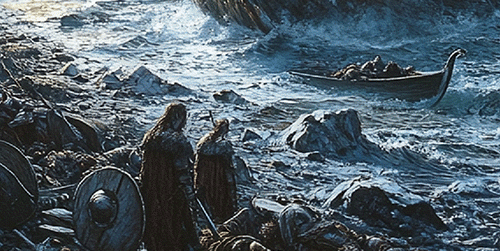
After months of sea‑borne hardship, the Vargdrekinn finally sighted the verdant coastline of Vinland. The landing was not a triumphant fanfare but a quiet, reverent moment as the crew beheld the land that would become the cradle for a new chapter in Norse history. The dragon eggs were carefully transferred to a safe cave, where they waited until prince Erik fulfilled the prophecy. He was to venture into the frozen land of Vinland and find the maiden who would take him to his final destination: The Land Of The Two Volcanoes.
What set the Vargdrekinn apart from every other longboat in the annals of the North is the notion that it was the only vessel ever commanded by Prince Erik. While his father’s flotilla continued to dominate the seas of Scandinavia, Erik’s singular ship became a symbol of personal destiny—a vessel forged not for empire but for a purpose chosen by fate itself. The story of the Vargdrekinn survived through oral tradition, sagas, and later, the ink of chroniclers who sought to capture the essence of a time when man, myth, and sea were inseparable.
In modern times, the name Vargdrekinn still reverberates in the halls of scholars and the imaginations of fantasy enthusiasts. It reminds us that the line between legend and history is often as thin as the planks of a longboat, and that the courage of twelve warriors, a prince’s resolve, and a handful of dragon eggs were enough to shape a continent’s destiny.
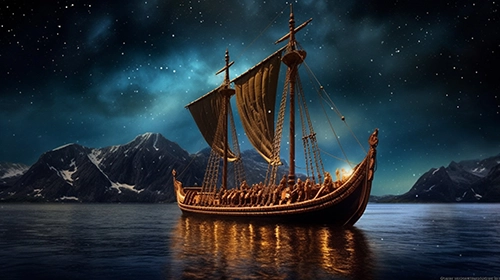
The Vargdrekinn’s tale is a testament to the Norse belief that the gods walk alongside those who dare—whether in the form of a prow shaped like a wolf‑dragon, a single sail cutting through the wind, or a crew whose oars sang the rhythm of battle. It stands as an enduring reminder that when a vessel is chosen by the divine, its journey becomes more than a passage across water; it becomes a pilgrimage through the very soul of a people.