Vikings
-
Norse Axe
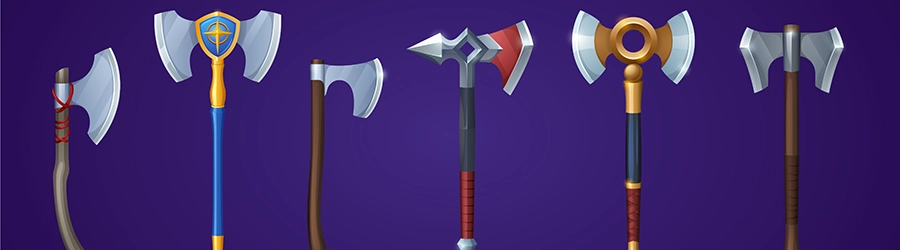
The most common hand weapon among Vikings was the axe – swords were more expensive to make and only wealthy warriors could afford them. The prevalence of axes in archaeological sites can likely be attributed to its role as not just a weapon, but also a common tool. This is supported by the large number of grave sites of female Scandinavians containing axes. Several types of larger axes specialized for use in battle evolved, with larger heads and longer shafts, including various types of bearded axes. The larger forms were as long as a man and made to be used with both hands, called the Dane Axe. Some axe heads…
-
A Journey from Norðvegr to Vinland
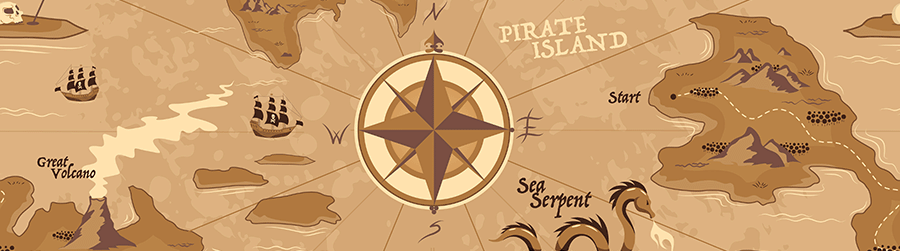
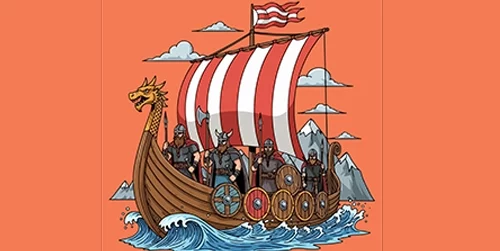
When the image of a Viking longship glides across a frothy Atlantic, it’s easy to imagine a crew hunched over parchment, tracing routes with ink‑filled quills. In reality, there is no archaeological or textual evidence that Norse explorers ever carried cartographic drawings or paper maps. Their “navigation manuals” were the sky, the sea, and a string of stories passed down through generations. “The Norse had no maps in the modern sense; they read the world with the eyes of a bird and the memory of an elder,” writes maritime historian Dr. Ingrid Sjöberg. Instead of flat, grid‑like charts, the Vikings relied on a combination of celestial cues, simple instruments, and…
-
The Vargdrekinn
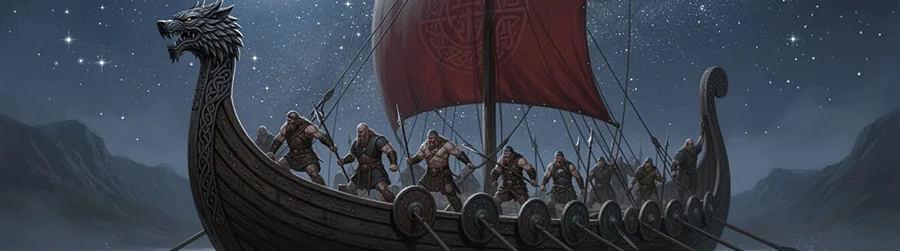
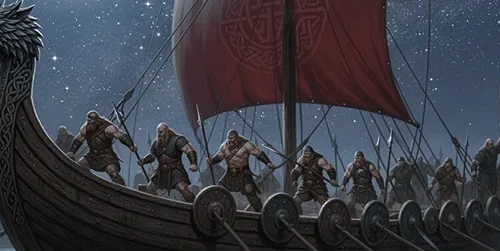
The Vargdrekinn: The Sacred Longboat that Carried Prince Erik to Vinland When the chronicles of the North are dusted off, the name that most often surfaces is that of Prince Erik, the daring son of King Akbar. While his father ruled from a grand, respectable flotilla, it was Erik’s own vessel that earned legend. The longboat that bore him across the storm‑tossed North Sea to the distant shores of Vinland was not a mere craft; it was a gift from the gods, a living embodiment of Norse myth, and a fortress on water. Known to the sagas as the Vargdrekinn, the ship’s story is a tapestry of bravery, mysticism, and the…
-
Viking Ships Were Not “Inferior” but Simply Different
When you picture a Viking longship slicing through the North Sea, the image that most people keep in mind is a sleek, low‑lying hull whose wooden planks overlap like the scales of a dragon. That overlapping technique is called clinker (or “lap‑strake”) construction. By contrast, the famous English warships Mary Rose and Victory were built using caravel construction, in which a solid internal frame is erected first and the planks are then fastened to it, leaving a smooth outer skin. At first glance the dominance of caravel in later medieval shipbuilding might suggest that clinker was a primitive, “poorer” method. The reality is more nuanced. Clinker and caravel each have…
-
Alikant: An American Dragon
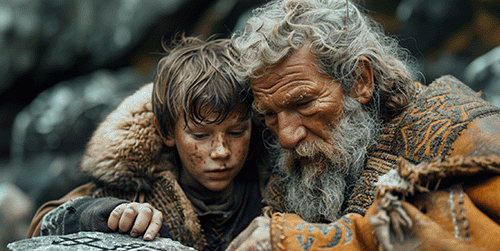
My name is Erik. I am the son of a king and a queen, but my first memories are not of silk banners or a gilded cradle. They are of the smell of damp earth, the calloused hand of a woman named Gunnhildr guiding my small fingers to plant a seed, and the rough, kind eyes of a man named Leifr showing me how to hold an axe without trembling. The story of how I came to be in that longhouse, the youngest of three children when my blood was royal, is a story of whispers and winter. It is a story my foster parents, Leifr and Gunnhildr never told…