Norse Axe
The most common hand weapon among Vikings was the axe – swords were more expensive to make and only wealthy warriors could afford them.
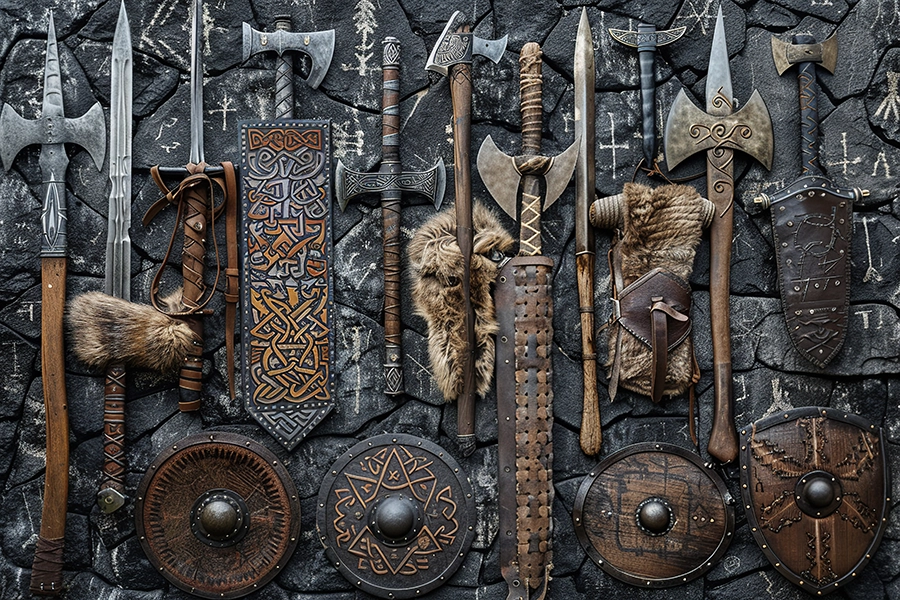
The prevalence of axes in archaeological sites can likely be attributed to its role as not just a weapon, but also a common tool.
This is supported by the large number of grave sites of female Scandinavians containing axes. Several types of larger axes specialized for use in battle evolved, with larger heads and longer shafts, including various types of bearded axes.
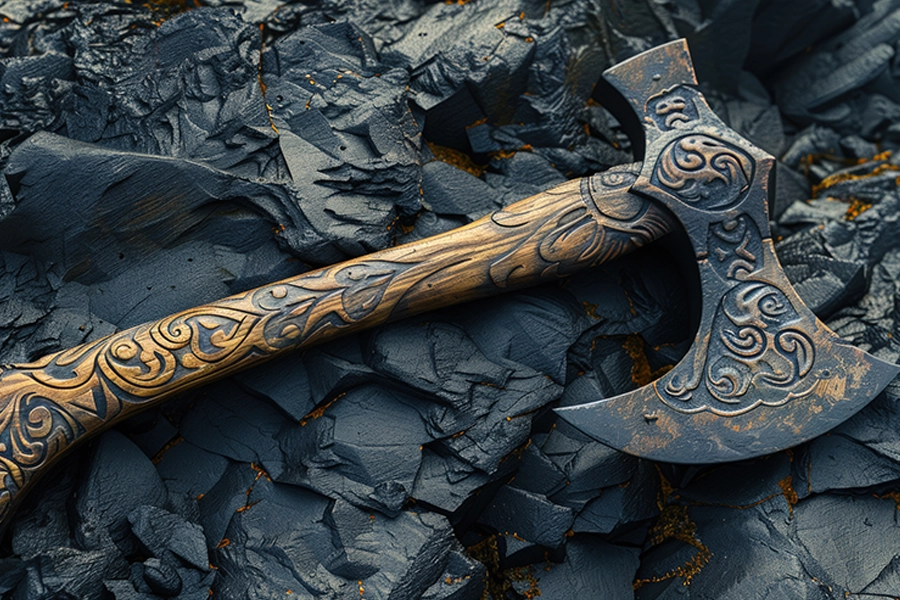
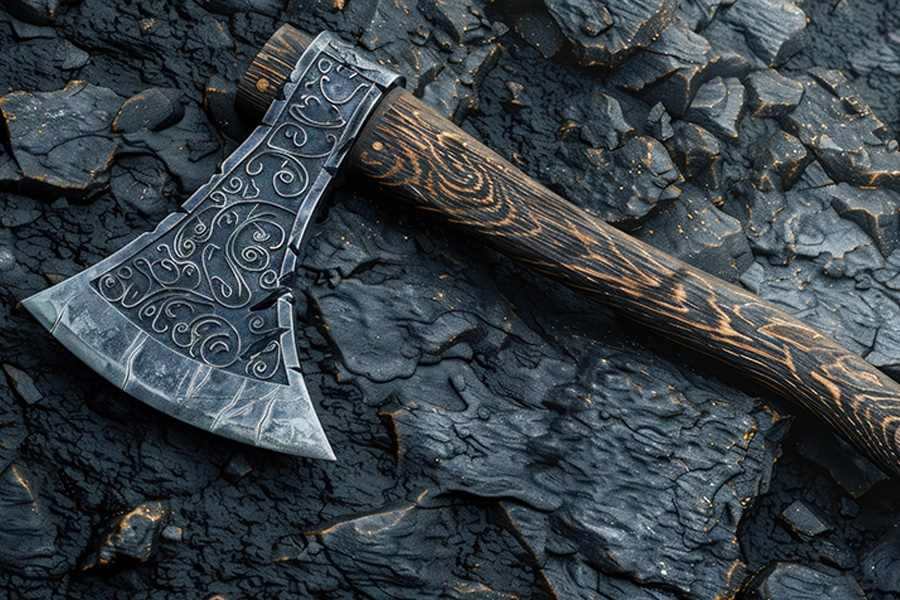
The larger forms were as long as a man and made to be used with both hands, called the Dane Axe. Some axe heads were inlaid with silver designs. In the later Viking era, there were axe heads with crescent shaped edges measuring up to 45 centimetres (18 in) called breiðöx (broadaxe).
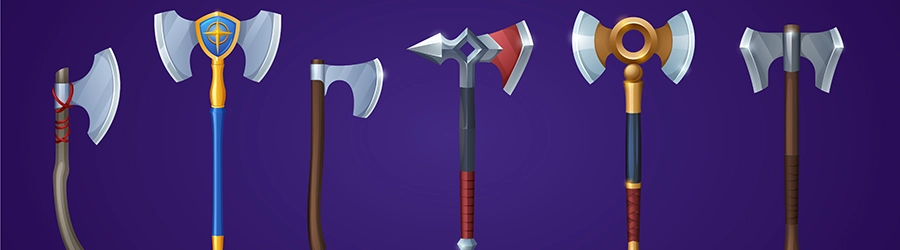
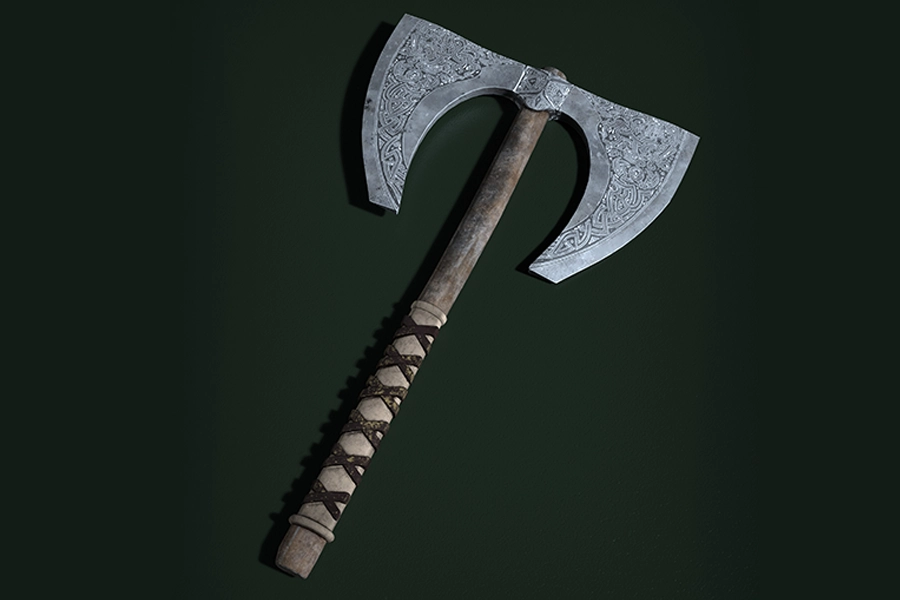
The double-bitted axes depicted in modern “Viking” art would have been very rare as it used more material and was seen as a waste during hard times, if they existed at all.
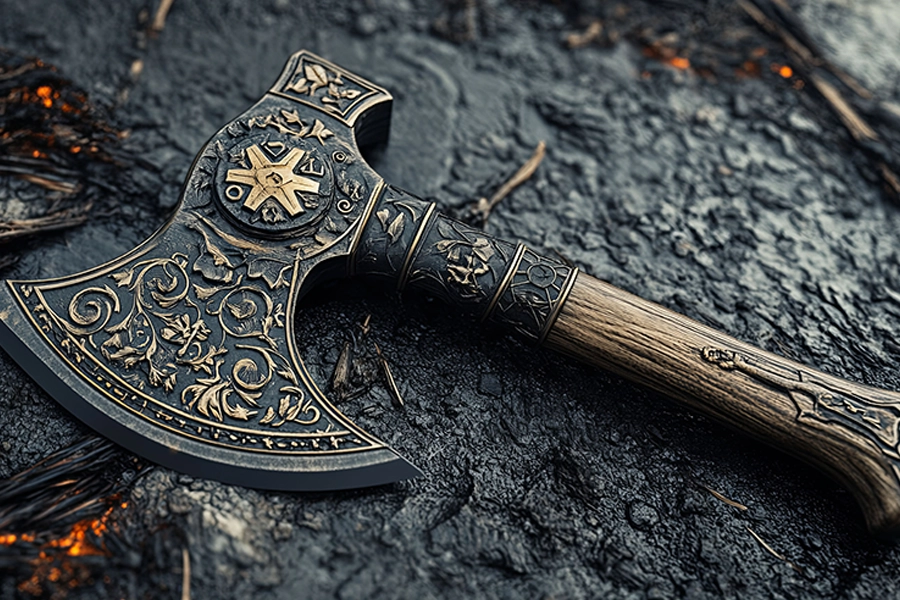
No surviving examples, authentic artwork or clear descriptions from records support the existence of double-bitted axes used by Vikings. Double-bitted axes were not forged by the Norse. Just about every axe they forged was single headed.
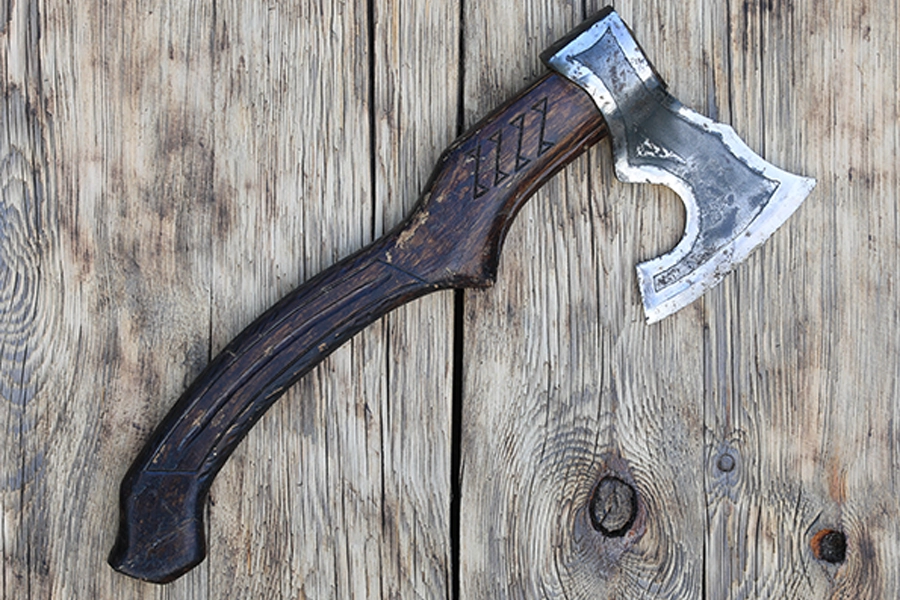
Vikings most commonly carried sturdy axes that could be thrown or swung with head-splitting force. The Mammen Axe is a famous example of such battle-axes, ideally suited for throwing and melee combat.
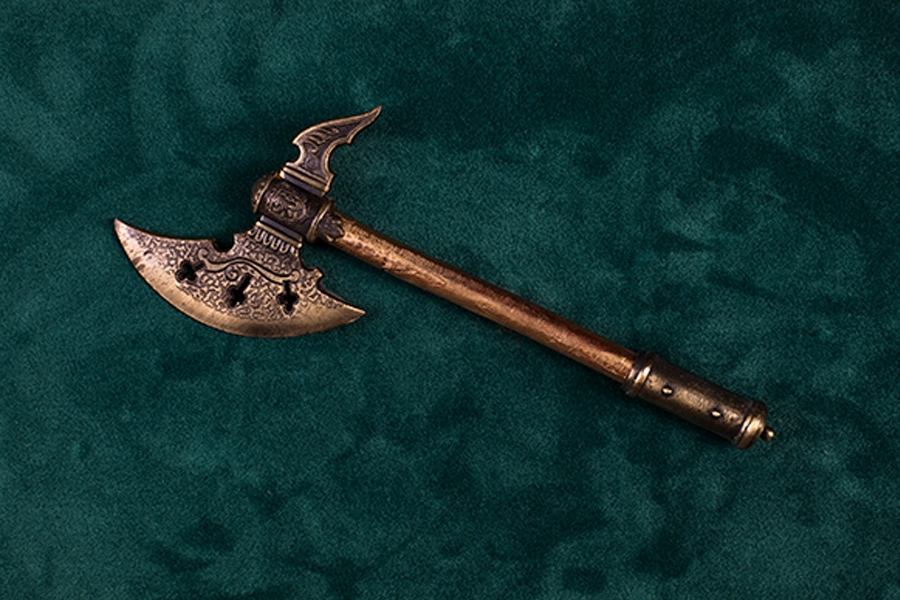
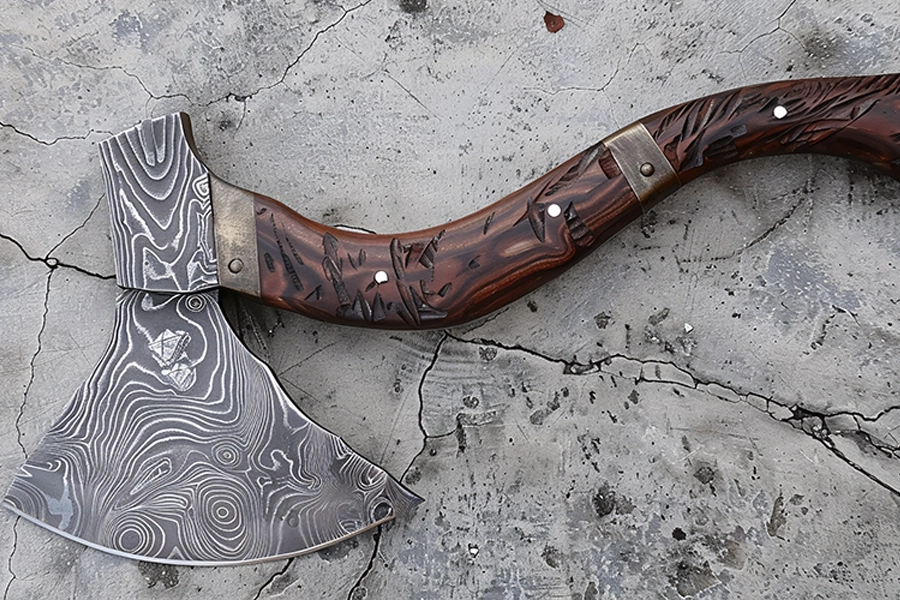
An axe head was mostly wrought iron, with a steel cutting edge. This made the weapon less expensive than a sword, and was a standard item produced by blacksmiths, historically.
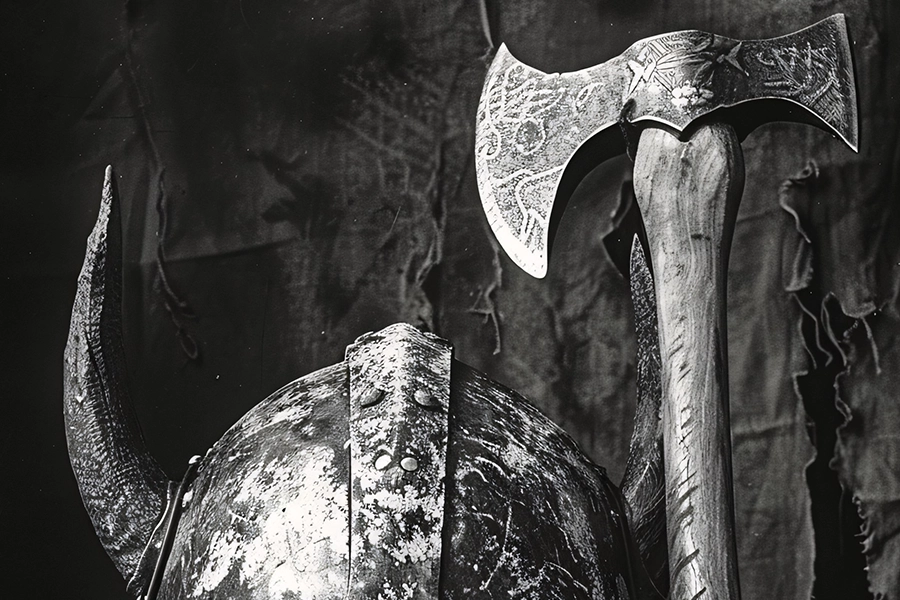
Like most other Scandinavian weaponry, axes were often given names. According to Snorri Sturluson’s Prose Edda, axes were often named after she-trolls.